
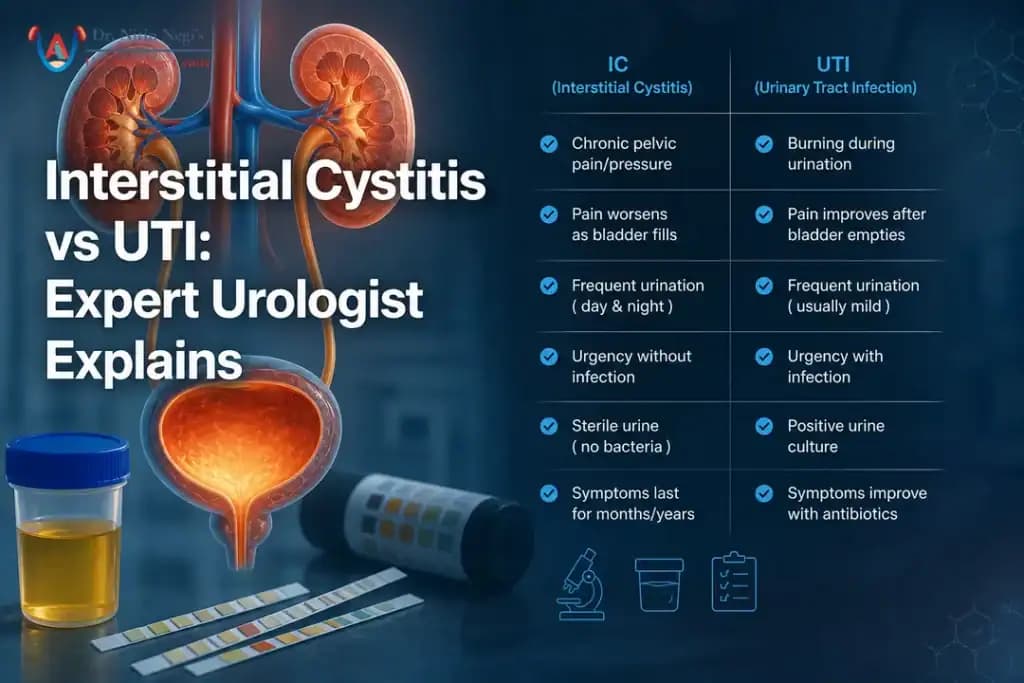
Confused by bladder pain and burning? An expert urologist hears this every day. Interstitial Cystitis vs UTI: Expert Urologist Explains will help you spot the differences, understand tests, and learn safe treatment options so you can act with confidence.
What Each Condition Means and Why It Hurts
Interstitial cystitis at a glance
Interstitial cystitis, also called bladder pain syndrome, is a chronic condition. It causes pelvic pain, urinary urgency, and frequency without an active bacterial infection. Many patients describe pressure in the bladder and a constant need to pass urine. Symptoms often flare in cycles.
Because the exact cause varies, the condition behaves differently person to person. Some patients notice food triggers such as citrus, spicy dishes, or caffeine. Others link flares to stress or their menstrual cycle. In our Jaipur urology practice, we see that careful tracking of triggers shortens flares and reduces anxiety.
Common bladder pain triggers
- Acidic foods and beverages, including soda and citrus
- Stress, poor sleep, or long travel without breaks
- Pelvic floor muscle tightness or overactivity
Urinary tract infection in brief
A urinary tract infection happens when bacteria multiply in the urinary tract, most often in the bladder. Typical symptoms include burning while passing urine, urgency, frequency, and cloudy or foul-smelling urine. Fever, flank pain, or nausea can indicate a kidney infection, which needs urgent care.
According to the U.S. National Institute of Diabetes and Digestive and Kidney Diseases, about 40% to 60% of women will experience at least one UTI in their lifetime, and men can be affected too, especially with prostate issues. You can read more in this NIDDK overview of urinary tract infections.
Signs That Mislead: IC vs UTI in Real Life
On a busy clinic day, we often meet patients who assume every burning episode is an infection. However, not every flare needs antibiotics. Understanding overlap versus differences prevents delays and protects you from unnecessary medication.
Overlap and key differences
Both conditions can cause burning, urgency, and pelvic pressure. However, a true infection usually shows bacteria and white blood cells on a urine test. Blood in urine can occur in both, yet clots and fever lean more toward infection. Meanwhile, IC flares tend to ebb and flow for months, and they often link to triggers, intercourse, or stress.
- Onset: UTIs start suddenly; IC often builds gradually and recurs.
- Urinalysis: UTIs show bacteria and nitrites; IC typically does not.
- Odor/cloudiness: More common with infection due to bacterial byproducts.
- Fever or flank pain: Suggests spread to kidneys; seek urgent care.
- Relief pattern: IC may improve with heat, hydration, and trigger control.
Importantly, antibiotics help infections but not IC. Because of this, global health authorities warn against unnecessary antibiotic use. The World Health Organization’s factsheet on antimicrobial resistance explains how misuse fuels drug-resistant bacteria, making future infections harder to treat.
For context on IC mechanisms, the NIDDK resource on interstitial cystitis/bladder pain syndrome outlines current theories, including bladder lining disruption and nerve hypersensitivity. As research evolves, treatment aims to calm nerves, protect the bladder lining, and relax pelvic floor muscles.
Diagnosis and Tests Your Expert Urologist May Use
Accurate diagnosis begins with a detailed history. We ask what triggers symptoms, how long flares last, and what provides relief. Then we perform a focused pelvic and abdominal exam. This hands-on approach often reveals muscle tenderness that points to pelvic floor involvement.
Next, we order targeted tests. A clean-catch urinalysis and urine culture help confirm or exclude infection. If you pass urine frequently at night or have blood on dipstick, we may add microscopy and an ultrasound to check post-void residual volume. When symptoms persist despite negative cultures, we consider cystoscopy to inspect the bladder lining. We reserve invasive testing for selected cases, because careful history and simple lab work often clarify the diagnosis.
In our clinic, we also review your medications, hydration, dietary pattern, and stress levels. Sometimes a new vitamin, exercise program, or even a change in job schedule explains a flare. Therefore, we prefer a stepwise plan that avoids over-testing while ensuring you feel heard and safe.
Treatments, Lifestyle, and When to See an Expert Urologist
Once we confirm the likely cause, we tailor therapy. For UTIs, we treat with the right antibiotic for the shortest effective course, guided by culture results whenever possible. We add pain relief, hydration, and follow-up instructions. For recurrent UTIs, we consider behavioral strategies, vaginal estrogen in appropriate patients, and occasionally preventive antibiotics.
For IC, we build a layered plan. First, we work on trigger control and pelvic floor relaxation. We often teach timed voiding and urge suppression. If needed, we add oral medicines that reduce bladder pain, or we instill protective agents into the bladder. Some patients benefit from nerve-modulating therapies or gentle physical therapy that focuses on the pelvic floor rather than aggressive Kegels.
Because outcomes vary, we set realistic goals. Many patients reduce pain scores and increase comfortable voiding intervals within weeks. However, long-standing symptoms may need several months and more than one approach. We monitor progress and adjust steps, rather than chasing a single “cure.”
When to see a urology doctor
You should not wait if you notice warning signs. The sooner we evaluate, the sooner you feel better. Seek care promptly if you have any of the following:
- Fever, flank pain, vomiting, or signs of severe infection
- Blood in urine, especially if you see clots
- Pain that lasts beyond two days despite hydration and rest
- Repeated “UTIs” with negative cultures
- Urinary retention, very weak stream, or new incontinence
If you live in or around Jaipur and want personalised guidance, you can connect with our team at Dr. Nitin Negi’s urology clinic. We offer modern diagnostics, minimally invasive procedures, and patient-first counselling.
Below are practical, clinic-tested tips you can start today. They do not replace a consultation, but they often ease symptoms while you arrange a visit.
- Hydrate wisely: spread water intake through the day; avoid late-evening overload.
- Use a bladder diary: track time of voids, pain level, and suspected triggers.
- Try a two-week elimination: reduce caffeine, soda, citrus, and very spicy foods; reintroduce one by one.
- Practice “urge suppression”: when urgency surges, pause, breathe, and relax the pelvic floor before walking to the toilet.
- Apply heat: a warm compress over the lower abdomen can settle spasms.
- Discuss probiotics or vaginal estrogen with your clinician if you have recurrent UTIs.
For kidney stone risks, enlarged prostate, or erectile concerns that complicate bladder symptoms, we evaluate the whole picture. Sometimes a small kidney stone mimics infection. Other times, prostate swelling slows the stream and increases nighttime frequency. Therefore, we check for these contributors during your visit and tailor your plan accordingly.
We also talk openly about antibiotic stewardship. When cultures are negative, antibiotics add risk without benefit. Meanwhile, proper hydration, bladder analgesics, and pelvic floor strategies can relieve pain while we await results. This balanced approach aligns with current global recommendations and protects you in the long term.
What we see in practice: people who combine lifestyle steps with targeted therapy usually regain daily confidence faster. Small, steady changes compound into real relief.
Finally, we emphasise follow-up. If symptoms improve only to return soon, bring your bladder diary and prior test results. We refine the plan, consider imaging, and review pelvic floor therapy options. When necessary, we discuss minimally invasive procedures offered at our centre, including laser stone surgery and modern therapies for BPH that reduce recovery time.
For trusted information and appointment details, visit the official website of Dr. Nitin Negi. You’ll find clear directions, service overviews, and ways to connect with our care team.
Conclusion: Clarity Brings Quicker Relief
IC and UTIs share many symptoms, yet their causes differ. Therefore, accurate testing and a stepwise plan matter. An expert urologist will sort the clues, limit unnecessary antibiotics, and personalise your care. If you feel unsure or your symptoms keep returning, reach out for assessment. We are happy to guide you, explain options, and help you choose the next best step for your urinary health.
Contact Dr. Nitin Negi, Urologist in Jaipur
📞 Phone: 9145888224, 9649888222
🏥 Hospital Address: MangalamPlus Medicity, Jaipur
🏥 Clinic Address: VS MediHUB,Jaipur