
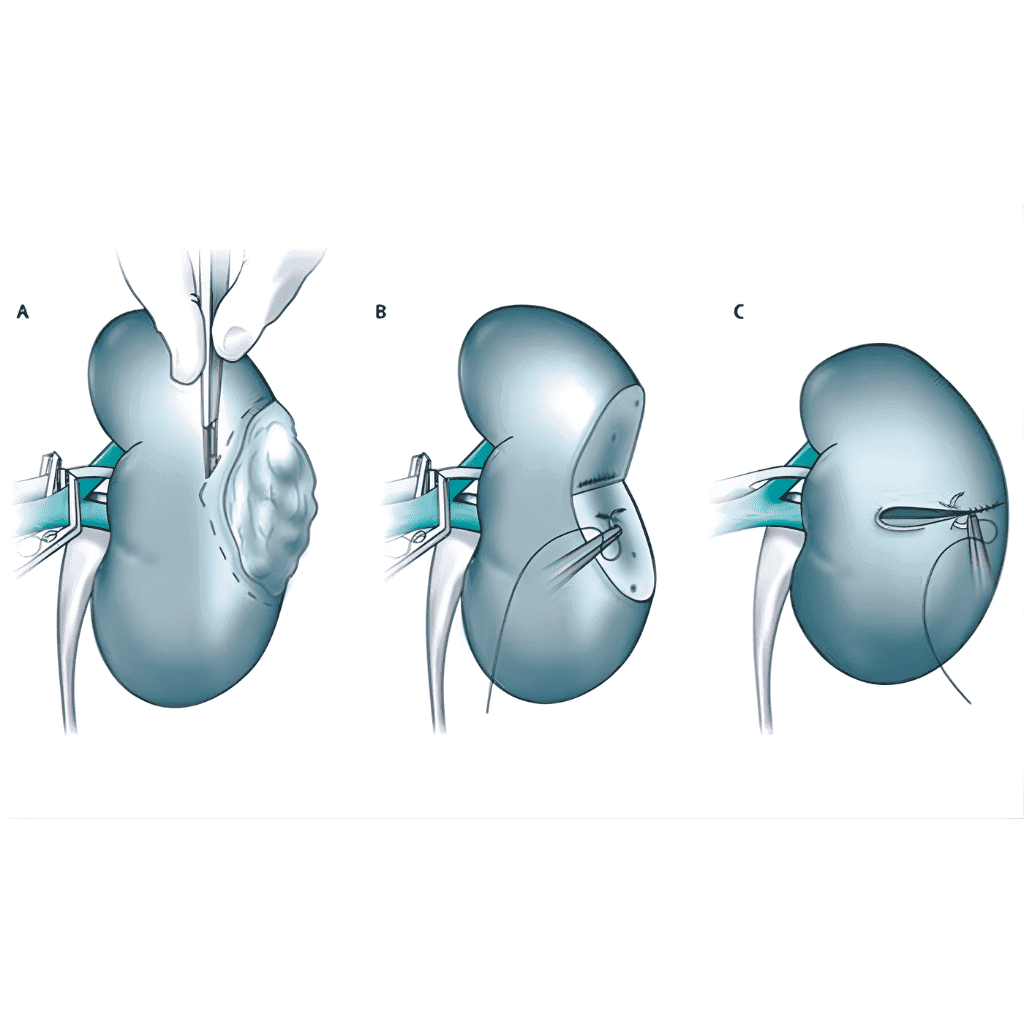
Kidney cancer (renal cell carcinoma in most adults) is increasingly found early, often by chance on an ultrasound done for another reason. Small tumours found early have an excellent outlook with surgery.
Symptoms
- Blood in the urine, visible or on testing
- Pain or a lump in the side
- Weight loss, tiredness or fever without another cause
- Often no symptoms at all in early stages
Risk factors
- Smoking
- Obesity and high blood pressure
- Long-term dialysis
- Family history and some inherited conditions
Diagnosis
A contrast CT scan of the abdomen is the key test, showing the size of the tumour and whether it has spread. A chest scan checks the lungs. A biopsy is needed only in selected cases.
Stages in simple terms
| Stage | Meaning |
|---|---|
| I | Tumour 7 cm or smaller, confined to the kidney |
| II | Larger than 7 cm, still confined to the kidney |
| III | Grown into major veins or nearby tissue, or lymph nodes |
| IV | Spread beyond the kidney’s surroundings or to distant organs |
Treatment
- Partial nephrectomy: removes only the tumour for many small tumours, preserving kidney function
- Radical nephrectomy: removes the whole kidney for larger tumours, usually by laparoscopy
- Active surveillance for very small tumours in older or frail patients
- Targeted and immune therapies for advanced disease, with the oncology team
Read about nephrectomy in Jaipur and urology cancer surgery.