
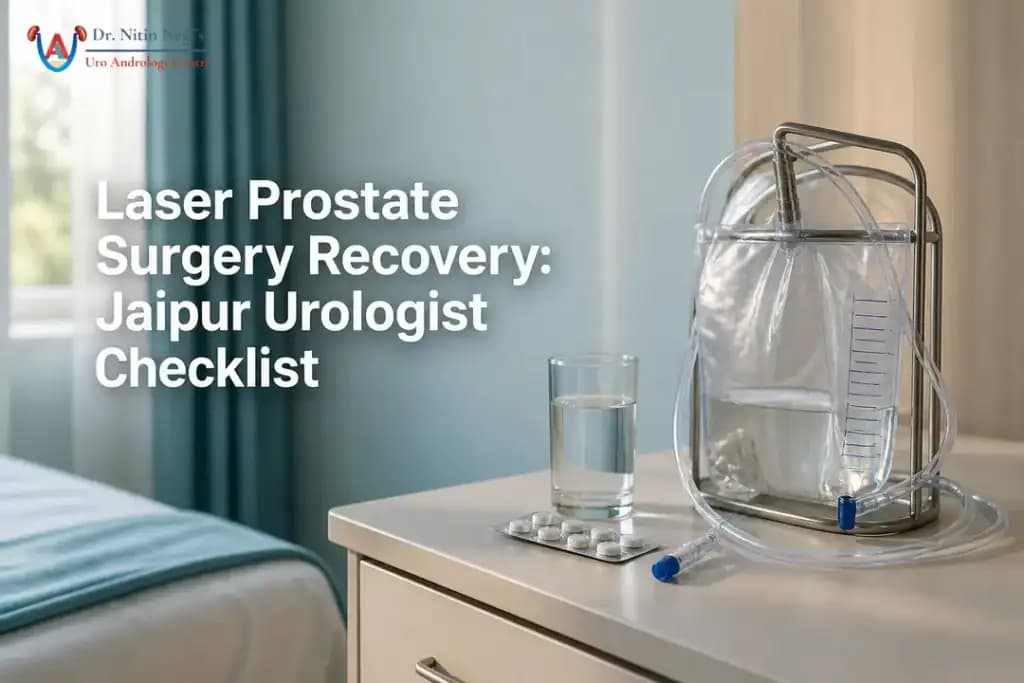
If you are searching for a clear Laser Prostate Surgery Recovery: Jaipur Urologist Checklist, you are in the right place. This guide uses a practical Jaipur urologist approach, so you know what to do at home, what is normal, and when to call your doctor. Moreover, it is written for patients and caregivers who want calm, step-by-step recovery after laser prostate surgery for enlarged prostate (BPH).
Why Recovery Planning Matters After Laser Prostate Surgery
Laser procedures for prostate treatment aim to improve urine flow with minimally invasive urology surgery. However, the prostate area stays delicate for a few weeks. Therefore, your comfort and safety depend on good hydration, sensible activity, and timely follow-up with your urology doctor.
In addition, many men feel anxious about urinary problems right after discharge. For example, mild burning, urgency, and small clots can occur as the prostate heals. Still, your urologist should set clear “normal vs not normal” boundaries for you.
Notably, recovery differs between procedures and patients. Results vary based on prostate size, medicines you take, diabetes control, and bladder strength. Consequently, use this as a checklist, then follow your surgeon’s specific instructions.
What A Jaipur Urologist Commonly Sees In Real Recovery
In our day-to-day urology practice, a pattern we repeatedly see is that patients recover smoother when they treat the first week like “healing time,” not “back to normal time.” First, they drink enough water and avoid straining. Next, they call early if fever, heavy bleeding, or urinary retention appears.
Similarly, we often see avoidable setbacks from constipation and overactivity. For instance, lifting heavy buckets, long bike rides, or intense gym work can trigger hematuria. Therefore, simple planning at home can prevent an unnecessary emergency visit.
Procedure Names You May Hear And Why They Matter
Depending on your prostate health and equipment availability, your surgeon may use different laser methods. For example, you may hear HoLEP (holmium laser enucleation of the prostate) or GreenLight PVP. Although both target enlarged prostate tissue, the catheter time, bleeding risk, and symptom timeline can differ.
Importantly, ask which technique you had and whether you have a stent or catheter plan. Then, keep that information handy for any urgent care visit. That small detail helps another clinician act faster.
Laser Prostate Surgery Recovery: Jaipur Urologist Checklist
Use the checklist below like a daily recovery map. First, focus on urine flow and hydration. Next, protect the healing area by avoiding strain.
First 72 Hours: Catheter, Urine Color, Hydration
Initially, you may go home with or without a catheter. If you have a catheter, keep the bag below bladder level. Also, secure the tube to prevent pulling during sleep.
Meanwhile, watch urine color. Light pink urine can be normal, especially after walking. However, bright red urine with thick clots needs medical advice.
Simple Hydration Target That Helps Most Patients
As a practical rule, sip water through the day so your urine stays pale yellow. In addition, spread fluids instead of drinking a lot at once. This reduces sudden urgency and helps flush small clots.
- Do: Drink fluids regularly, unless your doctor restricted fluids for heart or kidney health.
- Do: Take prescribed medicines on schedule, including antibiotics if given.
- Do: Walk indoors every few hours to prevent stiffness.
- Avoid: Alcohol for at least a week, since it can irritate the bladder.
- Avoid: Straining in the toilet or lifting heavy loads.
Consequently, many men notice less burning by day three to five. Still, if pain rises sharply, tell your urology clinic.
Week 1 To Week 4: Urination Pattern, Activity, Diet
During the first month, the most common complaint is frequency or urgency. Therefore, plan short outings and identify nearby washrooms. In contrast, you should not “hold urine” for long hours because that can worsen bladder irritation.
Next, rebuild activity slowly. Walking is ideal early on. However, avoid cycling, squats, running, and heavy weights until your urologist clears you.
Furthermore, constipation can worsen pelvic pressure. So, add fibre and consider a stool softener if your doctor agrees. Also, avoid very spicy foods if they trigger burning urination.
What’s Normal Vs Warning Signs During Recovery
Knowing what is expected reduces fear. At the same time, spotting red flags early protects your urinary tract health. Therefore, use the guidance below and contact your doctor if you feel unsure.
Often normal (when mild and improving): light burning, urgency, small clots, and a stop-start stream for a short period. Similarly, mild pelvic discomfort can occur after catheter removal.
Call your urologist promptly for: fever, chills, inability to pass urine, heavy bleeding, or worsening pain. In addition, foul-smelling urine with strong UTI symptoms may signal a bladder infection.
Notably, urinary retention needs urgent attention. If you cannot pass urine for several hours and feel lower abdominal fullness, do not wait. Instead, seek help quickly to protect kidney care and avoid hydronephrosis from back pressure.
For broader background on urinary tract infections and prevention principles, you can review patient-friendly resources from the World Health Organization health guidance. However, always follow your surgeon’s post-op plan first.
Follow-Up, Medicines, And Lifestyle For Lasting Relief
Follow-up visits matter because symptoms change over time. Therefore, bring a short note about your urine stream, night-time frequency, and any hematuria episodes. That record helps your urology doctor adjust medicines and plan testing.
Moreover, some men need temporary medicines for bladder calming. Others may continue BPH treatment medicines briefly. Consequently, never stop prescribed drugs without confirming.
Testing And “Proof” That Healing Is On Track
Your urologist may check urine analysis, culture if infection is suspected, and sometimes a flow study. In addition, PSA discussions may come up depending on your age and prostate cancer awareness needs. For general PSA context, see the overview on prostate-specific antigen (PSA). Still, interpretation must stay personal, because surgery type and prostatitis can affect values.
Importantly, the National Institute of Diabetes and Digestive and Kidney Diseases explains that BPH can cause lower urinary tract symptoms such as frequency, urgency, and weak stream. You can read their patient overview at NIDDK BPH information. This helps you understand why symptoms may take time to settle.
Sex, Ejaculation Changes, And When To Ask For Help
Many men worry about erectile dysfunction or ejaculation changes after prostate procedures. Therefore, ask your surgeon when sexual activity is safe again. Also, discuss the possibility of retrograde ejaculation, which can happen after some prostate surgeries.
Meanwhile, if you have ongoing erection difficulty, do not self-medicate. Instead, consult a specialist in andrology or men’s health. Care often starts with simple lifestyle and medication review.
Choosing The Right Urologist In Jaipur For Recovery Support
Recovery goes better when you can reach your doctor easily. Therefore, choose a urology clinic that provides clear discharge instructions and fast guidance for urinary problems. In addition, ask whether the team manages related issues like urinary incontinence, bladder problems, or kidney stone symptoms that sometimes coexist.
If you also deal with stones or recurrent UTIs, mention it early. A good plan can combine prostate treatment and kidney stone prevention advice. For example, hydration targets may differ if you have kidney health concerns or heart disease.
For patient education and consultation details, you can start with Dr. Nitin Negi’s urology clinic website. Additionally, you can review the doctor’s background on the clinic’s profile page before booking.
In short, this Laser Prostate Surgery Recovery: Jaipur Urologist Checklist works best when you pair it with personalised instructions from your surgeon. If your symptoms feel unusual, or if you see warning signs, contact a qualified urologist for timely advice. Moreover, a calm follow-up plan often makes the difference between slow recovery and steady improvement.
Contact Dr. Nitin Negi, Urologist in Jaipur
📞 Phone: +91 9649888222
🏥 Hospital Address: ManglamPlus Medicity, Jaipur
🏥 Clinic Address: VS MediHUB,Jaipur
Our clinic team regularly manages prostate health, urinary tract health, and minimally invasive urology surgery follow-ups. Therefore, you can use this guide to prepare questions and discuss your exact recovery timeline during your visit.