
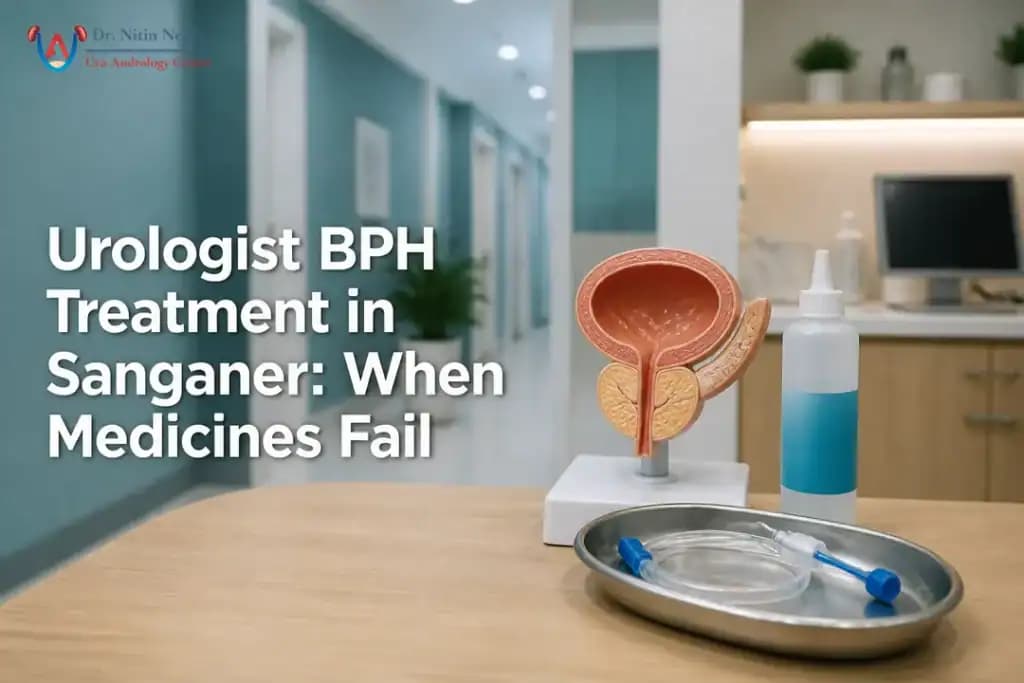
If you are searching for an urologist because tablets are no longer giving relief, this guide on BPH Treatment in Sanganer: When Medicines Stop Working explains what usually comes next. In simple terms, it covers why symptoms return, which tests matter, and how a urology doctor plans safer, minimally invasive prostate treatment. Most importantly, you will learn which warning signs need quick care and which options can help you regain normal urine flow.
Why BPH Symptoms Can Break Through Medicines
Benign prostatic hyperplasia, or enlarged prostate, often starts with mild urinary problems. For many men, alpha-blockers or 5-alpha reductase inhibitors reduce blockage and ease the stream. However, medicines do not remove the mechanical obstruction in every case. Over time, the prostate can keep growing or the bladder can weaken.
In clinic, we often meet men who did well for months and then notice the same pattern again. First, night-time urination increases. Next, starting urine takes effort. Then, the stream becomes thin and stops mid-way. Because of this slow shift, many people delay a review until urine retention or a UTI symptoms flare makes life difficult.
Importantly, “medicine stopped working” can also mean something else changed. For example, constipation, dehydration, certain cold medications, or uncontrolled diabetes can worsen urinary tract health. Therefore, a good urology evaluation checks the full picture rather than changing pills blindly.
Common Signs Your Current Plan Needs Review
Some clues suggest that medical therapy may no longer control the obstruction. Notably, these symptoms often come together rather than alone. If you see a trend, it helps to meet a urology doctor sooner.
- Frequent urination at night that disrupts sleep for weeks
- Straining, hesitancy, or a weak stream despite regular medicine use
- Feeling of incomplete emptying, or needing to pass urine again soon
- Sudden urinary retention, or pain and inability to pass urine
- Recurrent bladder infection or burning urination episodes
What Is Happening Inside: Prostate vs Bladder
BPH narrows the channel in the prostate. As a result, the bladder must push harder to empty. Initially, the bladder muscle compensates. However, long-standing obstruction can make it overactive or weak. Then urgency, urinary incontinence, or poor emptying can appear.
In addition, leftover urine becomes a place where bacteria grow. That increases the risk of urinary tract infection, bladder problems, and sometimes hematuria. In severe cases, back pressure can affect kidney health and cause hydronephrosis. Therefore, persistent symptoms deserve timely assessment.
Urologist-Led Assessment Before Changing Treatment
When medicines lose effect, the next step is not always “straight to surgery.” Instead, a urologist confirms the cause, measures severity, and checks for complications. That approach prevents missed diagnoses and helps select the least invasive option that still solves the blockage.
At our urology clinic, we follow a structured pathway. First, we listen for specific symptom triggers, medicine history, and fluid habits. Next, we check for red flags like urinary retention, fever, or visible blood in urine. Finally, we use objective tests to match symptoms with prostate size and bladder function.
Key Tests That Guide the Next Step
Several simple investigations can clarify what is happening. Moreover, they help your doctor explain “why you feel worse” with evidence rather than guesswork.
Urine analysis and culture help confirm bladder infection or inflammation. Ultrasound KUB with prostate checks residual urine, prostate size, stones, and hydronephrosis. Uroflowmetry measures flow rate, which reflects obstruction. In some cases, PSA testing supports prostate cancer awareness, although BPH can also raise PSA.
Process Detail: Post-Void Residual Matters
After you pass urine, ultrasound can measure how much urine remains. If residual volume stays high, you may face recurrent UTI symptoms and urinary retention. Therefore, this number often influences whether a minimally invasive urology surgery becomes the better choice.
For reference, the National Institute of Diabetes and Digestive and Kidney Diseases (NIDDK) overview on BPH explains common evaluation steps and treatment categories. Similarly, the World Health Organization (WHO) provides broader patient education and guidance on urinary health and safe care decisions.
When Symptoms Might Not Be Only BPH
Sometimes a man has urinary problems that resemble enlarged prostate but come from another cause. For example, urethral stricture, bladder stone, poorly controlled blood sugar, or certain medicines can mimic blockage. On the other hand, persistent hematuria needs evaluation for other urological disorders as well.
Because of this overlap, self-medicating or repeatedly switching brands can delay the correct diagnosis. A urologist can differentiate these causes and protect kidney care early.
BPH Treatment in Sanganer: When Medicines Stop Working
When tablets no longer control symptoms, the goal shifts to durable relief with minimal risk. Thankfully, modern prostate treatment offers options that fit different prostate sizes, bleeding risk, and recovery needs. Importantly, no single method suits everyone. Your anatomy, urine retention history, and other health issues guide the plan.
In our day-to-day practice, we repeatedly see that the best outcomes come from matching the procedure to the patient, not to a trend. For instance, a man with repeated urinary retention may need faster obstruction relief. Meanwhile, someone with mild residual urine but severe night frequency may benefit from bladder-focused adjustments too.
Minimally Invasive Options Your Urology Doctor May Discuss
Several procedures can reduce blockage and improve flow. Moreover, many of them allow early mobilisation and shorter catheter time. Your urologist will explain what fits your prostate size and medical profile.
- Laser prostate surgery to remove or vaporize obstructing tissue, often with less bleeding
- TURP (transurethral resection) for moderate-to-severe obstruction in suitable patients
- Enucleation techniques for larger prostates, depending on expertise and setup
- Catheter-based support as a temporary step in acute urinary retention
Notably, many men ask if laser equals “no risks.” That is not true. Any intervention can have side effects, such as temporary burning, urgency, infection risk, or changes in ejaculation. Therefore, your doctor should explain benefits and trade-offs in plain language.
To understand the general concept of BPH and how it affects urine flow, you can also review the background summary on Benign prostatic hyperplasia on Wikipedia. Still, your final decision should rely on medical examination and your urologist’s advice.
How Urologists Decide Between Procedures
First, the urologist looks at prostate size and shape on ultrasound. Next, flow rate and residual urine show how strongly the obstruction impacts your bladder. In addition, your bleeding risk, heart medicines, and history of UTI symptoms matter.
For example, if a man uses blood thinners, laser prostate surgery may offer an advantage in selected cases. Similarly, if the prostate is very large, an enucleation approach may provide better long-term relief. However, results vary depending on bladder strength and how long obstruction has existed. Therefore, timely treatment can protect urinary tract health.
Recovery, Safety, and Preventing Complications
Most men worry about recovery time, catheter duration, and sexual function. Those concerns are valid. Therefore, your urology doctor should explain what to expect before and after treatment, including typical discomfort and warning signs.
After a prostate procedure, you may notice mild burning, frequency, or small clots for a short period. Meanwhile, you will need good hydration and a short activity restriction. Importantly, fever, severe bleeding, or inability to pass urine needs urgent review.
Practical Tips That Support Healing
Small habits can reduce irritation and speed comfort. In addition, they lower the chance of bladder infection during recovery.
- Drink enough water through the day, unless your physician limits fluids
- Avoid constipation with fibre, warm fluids, and safe stool softeners if advised
- Skip heavy lifting and intense cycling until your urologist clears you
- Limit alcohol and very spicy foods if they worsen urinary urgency
- Take antibiotics or pain medicines exactly as prescribed
Also, keep follow-up appointments. They help confirm that residual urine has reduced and kidney health remains stable. If you have other conditions like diabetes, manage them closely. Better control often improves urinary tract health too.
When You Should Seek Urgent Care
Some symptoms should not wait. For example, complete urinary retention, fever with chills, or heavy bleeding needs prompt evaluation. Similarly, flank pain with reduced urine can indicate hydronephrosis or a stone-related block. In that case, a kidney stone doctor may evaluate for kidney stone symptoms alongside prostate blockage.
If you have known stones, your urologist may also discuss kidney stone treatment options. These can include laser kidney stone surgery or other minimally invasive urology surgery methods, depending on size and location. That combined planning can prevent repeated ER visits.
Choosing the Right Urologist in Sanganer for Next-Step Care
When medicines stop helping, choosing the right specialist becomes important. You want clear explanations, proper testing, and a plan that fits your daily life. Moreover, you want safe technique and honest counseling on side effects.
A helpful sign is when your doctor discusses alternatives and explains why one option suits you. Another sign is careful screening for prostate cancer awareness when indicated. Above all, a good urologist respects that symptoms affect sleep, travel, and confidence. That conversation matters as much as the procedure itself.
To learn more about services and patient education resources, you can visit Dr. Nitin Negi’s urology practice website. You can also explore urology treatment and minimally invasive surgery information for a starting point before your visit.
In short, if you are stuck with recurring symptoms, an experienced urologist can help you move from temporary relief to a more lasting plan. If you are specifically looking for BPH Treatment in Sanganer: When Medicines Stop Working, book a consultation and bring your test reports and medication list. A balanced evaluation will clarify whether you need a dose change, a new approach, or a procedure. That way, you choose confidently without rushing.
Contact Dr. Nitin Negi, Urologist in Jaipur
📞 Phone: +91 9649888222
🏥 Hospital Address: ManglamPlus Medicity, Jaipur
🏥 Clinic Address: VS MediHUB,Jaipur