
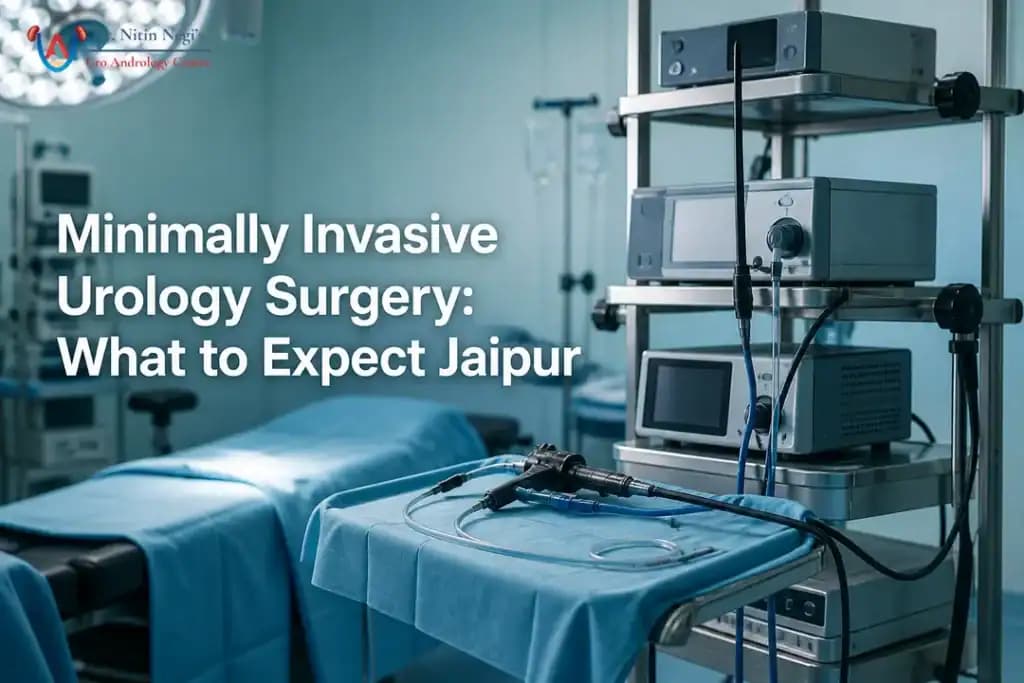
If you are searching for a urologist and wondering what “keyhole” or laser procedures feel like in real life, this guide is for you. In Minimally Invasive Urology Surgery: What to Expect Jaipur, you will learn how modern urology treatment works, why doctors prefer smaller incisions, and how to plan for smoother recovery. Most importantly, you will know which questions to ask before you commit to surgery.
Why Minimally Invasive Urology Surgery Has Changed Care
Minimally invasive urology surgery aims to treat urinary problems with less tissue trauma than open surgery. As a result, many patients experience smaller cuts, reduced blood loss, and earlier return to normal activity. However, the best approach still depends on your diagnosis, stone size, prostate size, kidney function, and overall health.
In Jaipur, many patients come in after weeks of pain or repeated antibiotics. Therefore, they often feel anxious about surgery. Fortunately, today’s options include endoscopic and laser techniques that often avoid large incisions.
In our day-to-day urology practice, a pattern we repeatedly see is that people delay care because the word “surgery” sounds scary. Meanwhile, they keep managing symptoms like burning urination, hematuria, or urinary retention at home. Once we explain the steps clearly, most families feel calmer and make better decisions.
Common Conditions Treated With Smaller-Cut Techniques
Urologists use minimally invasive methods for many urological disorders. For example, we commonly treat kidney stone symptoms, enlarged prostate (BPH), ureter blockage, hydronephrosis, and recurrent UTI symptoms. In addition, selected cases of urinary incontinence or bladder problems need endoscopic evaluation and targeted procedures.
Although each case differs, the goal stays the same. We restore urine flow, reduce infection risk, and protect kidney health. Consequently, we also focus on prevention so stones and infections do not keep returning.
How Your Urologist Chooses the Right Procedure
A urologist matches the technique to the problem location. For stones, we consider size, hardness, and where the stone sits. For prostate treatment, we review prostate size, bladder changes, and symptom severity.
Next, we factor in safety. For example, blood thinners, uncontrolled diabetes, or severe heart or lung disease can affect anesthesia choices. Similarly, pregnancy and kidney impairment can change imaging and medication plans. Because of these factors, results vary from person to person.
Minimally Invasive Urology Surgery: What to Expect Jaipur
Patients usually want to know the practical details. So, let’s walk through the typical journey, from tests to discharge. While exact steps vary, the core process remains similar across laser kidney stone surgery, laser prostate surgery, and other endoscopic procedures.
Before Surgery: Tests, Imaging, And Planning
First, your doctor confirms the diagnosis. For kidney stone treatment, we often use ultrasound, X-ray (KUB), or CT scans based on the case. For BPH treatment, we may add uroflowmetry, urine tests, and sometimes cystoscopy.
Second, your team reviews medicines. Therefore, you should share all tablets and supplements, especially blood thinners. You may need a urine culture if you have UTI symptoms or a bladder infection. Treating infection before a procedure reduces risk.
Importantly, anesthesia planning happens early. Most endoscopic surgeries use spinal or general anesthesia. As a result, you will get fasting instructions and pre-anesthesia clearance.
- Bring prior reports: scans, urine culture, PSA reports, and discharge summaries.
- List your medicines: especially aspirin, clopidogrel, warfarin, or newer anticoagulants.
- Ask about stents: many kidney stone removal procedures use a temporary DJ stent.
- Plan leave: arrange 2-7 days off depending on the procedure.
- Confirm follow-up: set a date for review, stent removal, or repeat tests.
One Detail That Often Reduces Anxiety
Many patients fear “tubes forever.” However, ureteric stents are usually temporary. Moreover, your urology doctor will tell you the planned removal timeline before discharge.
During The Procedure: Endoscopes, Lasers, And Robotic Tools
In endoscopic surgery, the surgeon passes a thin telescope through the natural urine passage. Therefore, there is often no external cut. For stones, techniques like ureteroscopy or RIRS use a scope to reach the ureter or kidney. Then, a laser breaks the stone into small fragments for removal or natural passage.
For enlarged prostate, laser prostate surgery removes or vaporizes obstructing tissue to improve urine flow. Consequently, many men see better stream and fewer nighttime trips to the toilet. Still, recovery speed depends on prostate size and bladder strength.
For some complex reconstructions or cancer operations, robotic urology surgery or laparoscopy may offer precise control through small ports. These approaches can reduce incision-related pain. However, they still require careful selection and experienced teams.
For a patient-friendly overview of how lasers work in medicine, you can review the concept of laser technology basics. For broader health information and patient safety resources, the World Health Organization (WHO) provides reliable guidance.
After Surgery: Hospital Stay, Pain Control, And Discharge
After the procedure, you rest in recovery while the team monitors urine output and vital signs. Most patients have mild to moderate discomfort rather than severe pain. Therefore, oral pain medicines often work well.
Some patients notice burning urination or mild hematuria for a short time, especially with a stent. In contrast, heavy bleeding, fever, or worsening flank pain needs urgent review. Your doctor will also advise when you can eat, walk, and return to work.
Notably, infection prevention matters. WHO highlights that good infection prevention and control reduces healthcare-associated infections, which is why pre-op urine testing and hygiene steps are important in urology care. You can explore WHO’s infection prevention resources via the WHO Infection Prevention And Control guidance.
Procedure-Specific Recovery: Stones, Prostate, And Urine Flow
Recovery looks different across procedures. So, it helps to understand what is “normal” after common minimally invasive treatments. That clarity prevents panic and helps you heal with confidence.
In general, hydration, short walks, and correct medicines support faster healing. In addition, follow-up imaging confirms that your kidney care plan is working.
For kidney stone removal, you might feel colicky discomfort if small fragments pass. Meanwhile, a stent can cause frequency and urgency. Your doctor may prescribe alpha-blockers or antispasmodics to reduce symptoms.
For prostate treatment, you may see burning, urgency, or mild bleeding early on. Therefore, you must avoid heavy lifting and constipation for a short period. Over time, urine flow improves as swelling settles.
For urinary retention or obstruction, the key goal is stable drainage. Consequently, your surgeon may keep a catheter for a short time. Once removed, you will track stream, frequency, and residual urine if needed.
For evidence-based patient education on urinary tract health, the U.S. National Institute of Diabetes and Digestive and Kidney Diseases offers detailed material. See the NIDDK overview of urologic diseases for a trusted reference.
Risks, Warning Signs, And How To Prepare For The Best Outcome
All surgeries carry some risk, even when minimally invasive. However, good preparation lowers complications. Therefore, you should know both the benefits and the limits of these procedures.
Common risks include infection, bleeding, temporary urinary problems, or stent discomfort. Less commonly, patients can develop ureter injury, stricture, or persistent symptoms. In addition, some people need a staged procedure for large stones or very enlarged prostate.
Importantly, call your surgeon if any of these occur:
- Fever or chills
- Severe flank pain not relieved by medicines
- Inability to pass urine
- Heavy bleeding with clots
- Persistent vomiting or dizziness
To prepare well, focus on basics. First, stop smoking if you can. Second, control blood sugar and blood pressure. Finally, follow fasting and medicine instructions exactly, because anesthesia safety depends on them.
Also, remember a key nuance. A “minimally invasive” label does not mean “minor” for every patient. For example, long-standing bladder outlet obstruction can weaken the bladder. Consequently, symptom relief may take time even after successful surgery.
Choosing A Urology Doctor In Jaipur And Next Steps
When you choose a urology clinic, look for clear communication and a patient-first plan. In addition, ask whether the team offers laser kidney stone surgery, prostate care, and andrology support for men’s health concerns like erectile dysfunction or male infertility.
You should also expect a transparent explanation of options. For instance, medicines may help BPH treatment early, while surgery fits severe obstruction. Similarly, small stones may pass, while impacted stones often need intervention. Therefore, a good plan balances safety, comfort, and kidney health.
If you want to read more patient education resources and book a visit, you can start at Dr. Nitin Negi’s urology clinic website. You can also review services and approach on the same site via advanced urology care in Jaipur.
In summary, Minimally Invasive Urology Surgery: What to Expect Jaipur becomes much less stressful when you know the steps and recovery milestones. A skilled urologist will tailor the method to your diagnosis, explain trade-offs, and plan follow-up so you heal safely. If you have ongoing urinary problems, consider a consultation for a clear diagnosis and a calm, non-rushed treatment plan.
Contact Dr. Nitin Negi, Urologist in Jaipur
📞 Phone: +91 9649888222
🏥 Hospital Address: ManglamPlus Medicity, Jaipur
🏥 Clinic Address: VS MediHUB,Jaipur
As a dedicated urology practice focused on minimally invasive care, we share education like this to help patients make informed choices and prepare confidently for treatment.