
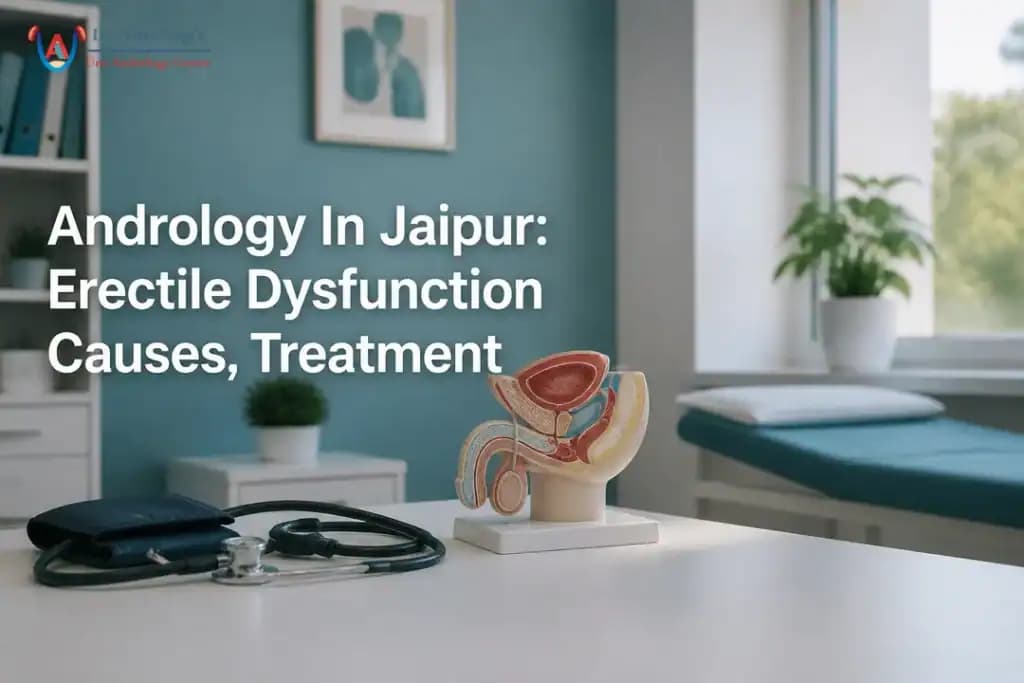
Andrology In Jaipur: Erectile Dysfunction Causes, Treatment is a common search for men who want clear, private, science-based help from a urologist. Erectile dysfunction can feel sudden, but it rarely has a single cause. Therefore, this guide explains the most likely triggers, what tests a urology doctor may suggest, and what treatment options can realistically help.
Why Erectile Dysfunction Needs A Proper Medical Workup
Erectile dysfunction (ED) means ongoing trouble getting or keeping an erection firm enough for sex. However, one bad night does not equal ED. Most doctors consider it ED when the problem repeats for weeks or months.
Importantly, ED can act as a warning sign. It may point to blood vessel disease, hormone imbalance, medication effects, or stress-related patterns. As a result, seeing a urologist can protect both sexual function and overall health.
In our day-to-day urology practice, a pattern we repeatedly see is men trying supplements first. Meanwhile, the real issue may be uncontrolled diabetes, high blood pressure, or anxiety that keeps worsening. Therefore, an early, structured evaluation often saves time and reduces worry.
When To See A Urology Doctor Quickly
Many men wait too long because of embarrassment. However, ED is a medical issue, not a character flaw. You should consider a prompt visit if the problem persists, or if it appears with other urinary problems.
- Sudden ED after starting a new medicine for blood pressure or depression
- Loss of morning erections with fatigue or low libido
- Penile pain or curvature, which may suggest Peyronie’s disease
- Diabetes or known heart disease along with erection issues
- Urinary symptoms like weak flow, urinary retention, or frequent night urination
In addition, seek urgent care for painful erections lasting over four hours. Doctors call this priapism, and it needs emergency treatment.
Andrology In Jaipur: Erectile Dysfunction Causes, Treatment
Andrology focuses on male reproductive and sexual health. Therefore, an andrology-focused urologist looks beyond “one pill fixes all.” ED often involves blood flow, nerves, hormones, and mental health working together.
Notably, the National Institutes of Health describes ED as a condition that affects many men and becomes more common with age. You can read the overview from the National Institute of Diabetes and Digestive and Kidney Diseases (NIDDK) on erectile dysfunction.
Common Physical Causes: Blood Flow, Nerves, And Hormones
First, erections depend on healthy blood vessels. If arteries narrow from diabetes, smoking, or high cholesterol, the penis may not fill well. Similarly, high blood pressure can damage vessel lining over time.
Second, nerves matter. For example, long-standing diabetes can reduce penile nerve signals. In addition, spinal problems or pelvic surgeries can affect nerve pathways.
Third, hormones can play a role. Low testosterone may reduce desire and weaken erectile quality for some men. However, testosterone is not the cause in every case. Therefore, a urologist may test hormones only when symptoms and history suggest it.
What About Prostate Problems Like BPH?
Enlarged prostate (BPH) does not directly “cause” ED in every man. However, urinary symptoms can worsen sleep and mood. Also, some BPH medicines can affect sexual function in certain patients. Therefore, prostate treatment should be personalized, especially if ED is already present.
Psychological And Lifestyle Triggers That Often Get Missed
Stress, performance anxiety, depression, and relationship strain can reduce erections even when physical health looks fine. Moreover, porn overuse in some men can shift arousal patterns. In contrast, a calm environment and better sleep can improve function.
Lifestyle factors also matter. For instance, smoking reduces blood flow and damages vessels. Similarly, heavy alcohol use can suppress erections and lower testosterone over time. Therefore, treatment plans often combine medical therapy with realistic habit changes.
How A Urologist Diagnoses ED: Tests And What To Expect
A good evaluation feels private and respectful. First, the doctor takes a focused history, including sexual timing, firmness, desire, and ejaculation. Next, they ask about kidney health, urinary tract infection history, and medicines. This detail helps because many urological disorders overlap.
After that, a physical exam checks blood pressure, body habitus, penile anatomy, and testicular health. Importantly, the goal is not judgment. It is accurate diagnosis.
Many men worry about “lots of tests.” However, the workup often stays simple. Tests depend on your age, symptoms, and risk factors.
- Blood sugar and HbA1c to assess diabetes control
- Lipid profile for cholesterol and vascular risk
- Testosterone (sometimes with prolactin or thyroid tests) when indicated
- Urine tests if UTI symptoms or bladder infection signs exist
- Penile Doppler ultrasound in select cases to assess blood flow
Furthermore, your urologist may ask about heart risks. ED can correlate with cardiovascular disease because penile arteries are smaller than coronary arteries. For broader prevention guidance, you can explore the World Health Organization fact sheet on cardiovascular disease.
Treatment Options In Jaipur: Medicines, Devices, And Procedures
ED treatment works best when it matches the cause. Therefore, the same approach will not fit everyone. Also, results vary with diabetes control, vascular disease, and mental health factors. A trustworthy plan sets expectations early and adjusts over time.
If you want to understand available care pathways, you can also browse the patient education resources on Dr. Nitin Negi’s urology clinic website.
First-Line Treatments And Safe Use
Doctors often start with oral medicines like PDE5 inhibitors. They improve blood flow response during sexual stimulation. However, they do not create instant desire, and they need correct timing.
Importantly, some men cannot use these medicines. For example, patients taking nitrate medicines for chest pain must avoid them. Therefore, always tell your urology doctor about heart medications and supplements.
Along with medicines, lifestyle steps can improve outcomes. First, aim for regular activity and weight control. Next, stop smoking and limit alcohol. In addition, manage sleep apnea if present, because poor oxygenation can worsen ED.
Second-Line Support: Counseling, Vacuum Devices, And Injections
When anxiety or relationship stress plays a role, counseling can help. Moreover, sex therapy can reduce performance pressure and rebuild confidence. This is not “all in the mind.” Instead, it targets a real feedback loop between worry and arousal.
Vacuum erection devices provide a non-drug option. They draw blood into the penis and use a ring to maintain firmness. Similarly, intracavernosal injections can create a reliable erection in selected patients. Your urologist explains dosing and safety, because misuse can cause pain or prolonged erections.
Surgical Options For Select Cases
Penile implants can help men with severe ED that does not respond to other treatments. They offer high satisfaction in the right candidates. However, surgery has risks, such as infection or mechanical failure. Therefore, your doctor will discuss benefits and trade-offs in detail.
Some men also ask about “laser” or “robotic” solutions for ED. In reality, minimally invasive urology surgery applies more often to kidney stone removal, prostate treatment, or urinary tract health procedures. A responsible urologist will clarify what has evidence and what does not.
For broader context about evidence and terminology, the Wikipedia overview of erectile dysfunction can help you understand common definitions. However, you should rely on your doctor for diagnosis and treatment choices.
Choosing The Right Clinic And Preparing For Your Visit
First, look for a urology clinic that offers private counseling and structured evaluation. Next, ask if they handle men’s health concerns like male infertility, prostate health, and urinary problems. That range matters because ED often overlaps with BPH treatment needs or metabolic disease.
To make your consultation smoother, bring a simple list of medicines and supplements. Also, note your symptoms using clear examples, such as “firmness drops after two minutes” or “no morning erections.” This helps your urologist act faster.
If you also have kidney stone symptoms, hematuria, or recurrent UTI symptoms, mention them. Sometimes the same visit can address multiple concerns. For patient-friendly education, you can review additional healthcare blogs and service information via the clinic’s urology resources.
Finally, remember that ED treatment is rarely instant. However, many men improve with step-by-step care and follow-up. In short, the best outcomes come from honest history, safe medication use, and risk-factor control.
A Practical Takeaway Before You Start Treatment
First, avoid self-medicating with unknown pills. Second, do not mix ED drugs with alcohol-heavy nights. Third, treat underlying issues like diabetes, high blood pressure, or sleep problems.
Most importantly, choose a plan you can maintain. Therefore, a urologist will often start with the simplest effective option and adjust based on your response.
Conclusion: If you are searching for Andrology In Jaipur: Erectile Dysfunction Causes, Treatment, start with a medically guided evaluation rather than guesswork. A urologist can identify whether blood flow, hormones, medicines, stress, or prostate health drives your symptoms. Because every case differs, your doctor will tailor treatment and set realistic expectations. If you want supportive, evidence-based care, you can book a consultation and discuss options without pressure.
Contact Dr. Nitin Negi, Urologist in Jaipur
📞 Phone: +91 9649888222
🏥 Hospital Address: ManglamPlus Medicity, Jaipur
🏥 Clinic Address: VS MediHUB,Jaipur