
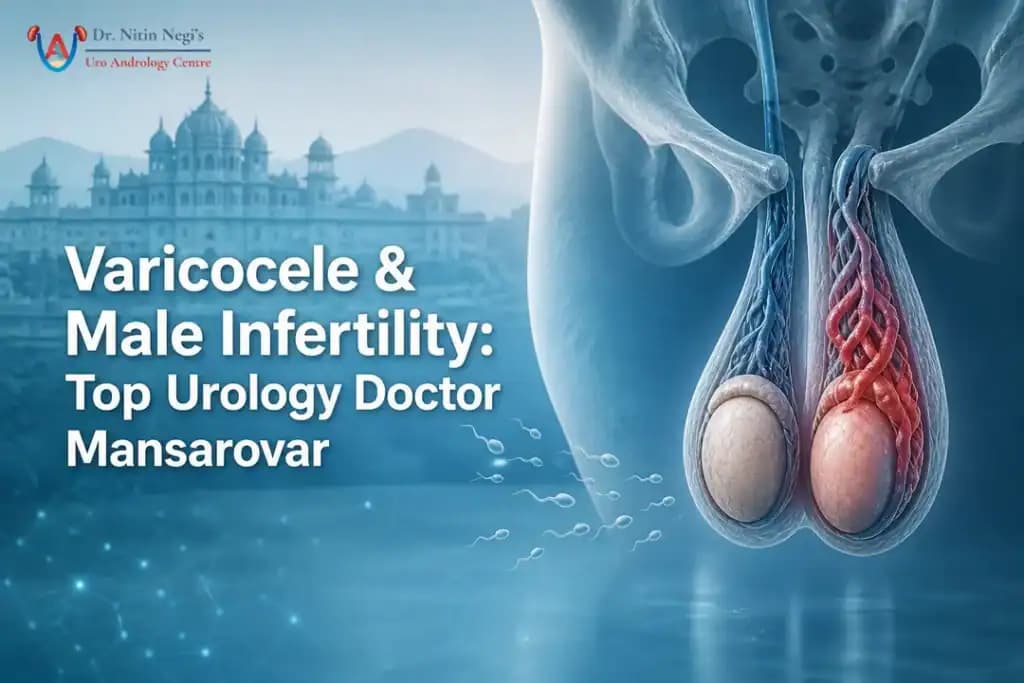
Varicocele & Male Infertility: Top Urology Doctor Mansarovar is a clear, patient-first guide to help you understand a common yet confusing cause of reduced sperm quality. If you searched for urology information in Jaipur, you will learn what it is, how we diagnose it, and which treatments truly help. The exact focus is practical care with a qualified urology doctor mansarovar so you can make confident, informed decisions.
What Is a Varicocele and Why It Matters
A varicocele is a group of enlarged veins in the scrotum. Think of it like varicose veins in the leg, but around the testicle. Because these veins do not drain blood well, heat builds up. Consequently, the testicle can struggle to produce healthy sperm. Men may experience dull scrotal pain, heaviness after long standing, or they may notice reduced semen quality during fertility testing.
Prevalence numbers help. According to the World Health Organization, infertility affects a significant share of people worldwide, underscoring the need for early evaluation and accurate treatment (WHO overview of infertility). Importantly, medical reviews note that varicoceles appear in a sizeable portion of men, and rates rise within infertility clinics (NCBI resources on varicocele and male infertility). These figures highlight why a timely assessment matters.
How a varicocele affects fertility
Two mechanisms often drive the problem. First, increased scrotal temperature can slow sperm production. Second, venous stasis may raise oxidative stress, which can damage sperm DNA. Therefore, some men see lower counts, weaker motility, and more abnormal shapes. Others feel fine but still show abnormal semen analysis. Both patterns are common in clinic.
Heat, oxidative stress, and sperm quality
The testicle needs a few degrees cooler than body temperature to produce sperm efficiently. When veins swell, warm blood lingers and raises local heat. Meanwhile, poor drainage can increase reactive oxygen species. As a result, sperm may move slowly and fertilize less often. Not every man with a varicocele becomes infertile. However, if semen parameters decline and a clinical varicocele is present, targeted treatment can help selected patients.
Signs, Diagnosis, and When to Seek Help
Men usually describe a dragging ache that worsens through the day. Sometimes a partner’s difficulty conceiving prompts the first test. Because other issues can mimic this condition, a careful evaluation is essential. A physical exam while standing is the starting point. Next, a color Doppler ultrasound confirms dilated veins and reflux. We also order a semen analysis that follows WHO laboratory standards to check count, motility, and morphology (WHO semen analysis guidance).
When to consult Urology Doctor Mansarovar
Consider a specialist visit if you have scrotal heaviness, visible “bag of worms” veins, or trouble conceiving after regular, unprotected intercourse for one year. In addition, seek help if semen reports show falling counts or motility over time. Finally, come sooner if pain limits work or sport. Early advice avoids months of uncertainty and helps you plan a safe, stepwise approach.
- Schedule an evaluation if you feel a dull ache that worsens by evening.
- Bring any semen or ultrasound reports for a focused review.
- Discuss lifestyle factors such as heat exposure, smoking, or tight clothing.
- Ask about timelines, costs, and recovery so you can plan family goals.
In our daily practice in Jaipur, we often meet couples who feel stuck between internet myths and real choices. We start with clear explanations, then map options to their priorities. For some, pain relief is the goal. For others, the priority is natural conception or improving IVF outcomes. Because each case differs, the plan should fit your age, semen results, female partner’s fertility profile, and work routine.
Treatment by Urology Doctor Mansarovar: Options That Work
Not every varicocele needs surgery. If pain is mild, scrotal support, rest after sport, and anti-inflammatory medicines can help. However, when semen quality drops or pain persists, two evidence-based procedures rise to the top. Importantly, both aim to stop refluxing blood in the testicular veins and protect sperm production.
Microsurgical varicocelectomy vs embolization
Microsurgical varicocelectomy is a small-incision day-care operation. The surgeon uses an operating microscope to carefully identify and tie the problematic veins while preserving the testicular artery and lymphatics. Therefore, the risk of hydrocele or artery injury stays low. Many patients return to desk work within one week. Improvement in semen parameters usually appears across several months, because sperm production cycles take time to reset.
Radiologic embolization is a puncture-based, image-guided option. An interventional radiologist threads a tiny catheter through a vein, then blocks the refluxing testicular vein using coils or glue. As a result, blood no longer pools in the scrotum. Recovery is rapid, yet not every anatomy suits this route. Furthermore, access can fail if the vein anatomy is highly variant.
Choosing based on symptoms and goals
Both approaches target the same physiology. Microsurgery remains widely chosen when patients want a durable result and a low recurrence rate. Embolization helps when a patient prefers no groin incision or has had prior surgery. Your final choice should consider pain level, semen results, partner factors, and your tolerance for downtime. We discuss these trade-offs in detail during counseling.
As a clinic, we focus on precision care. We use WHO semen reporting, standardized Doppler criteria, and individualized counseling. Because transparency builds trust, we clarify that surgery improves semen parameters in many patients, but pregnancy depends on both partners. Evidence summaries from authoritative sources support these points (background reading on varicocele).
If you prefer an in-person review, visit Dr. Nitin Negi’s urology clinic in Jaipur. The team offers modern urology treatment, including advanced stone care, prostate evaluation, and focused male health services. We balance outcomes with comfort and cost, so you feel informed at every step.
Recovery, Lifestyle Support, and Realistic Expectations
Good recovery begins with simple steps. First, wear scrotal support for one to two weeks. Second, limit heavy lifting for the same period. Third, keep the incision dry for 48 hours if you had microsurgery. Most men return to office work quickly. Light jogging usually resumes after review. As always, follow your surgeon’s specific advice.
Diet, exercise, and preventive habits
Healthy routines back your long-term fertility. Therefore, aim for a balanced plate with vegetables, lean protein, and whole grains. Hydrate well, avoid tobacco, and moderate alcohol. In addition, keep laptops off the lap and reduce hot-tub exposure, which may raise scrotal temperature. Manage weight with regular exercise and good sleep. These habits support sperm quality and general urinary health.
Semen parameters improve gradually. For many men, we repeat semen testing three months after treatment, then again at six months. If your partner also needs support, we coordinate care with fertility colleagues to avoid delay. Because every couple’s timeline differs, we set shared milestones early. That way, you always know the next step.
Pain relief usually arrives fast. Fertility benefits take longer because new sperm mature over several weeks. Consequently, do not feel discouraged by the first report. We track trends rather than a single number. Importantly, we also remain honest about limits. Varicocele repair may not solve every fertility challenge, especially if severe female-factor issues exist. Balanced guidance helps you choose the right mix of natural attempts, IUI, or IVF when needed.
At our center, we also review other urological concerns that can intersect with fertility, such as urinary tract infection symptoms, ejaculatory duct issues, and hormonal imbalances. When indicated, we order targeted blood tests and offer counseling for erectile concerns. Comprehensive care often reduces anxiety and speeds progress.
Patients often ask about newer technologies. Microsurgical tools, refined sutures, and better magnification already make today’s surgery more precise than older methods. Furthermore, anesthesia techniques support quick recovery with minimal nausea. We also provide clear post-op instructions and a helpline number, so you never feel alone during healing.
If you want a second opinion, we welcome it. Shared decisions lead to higher satisfaction. You can also learn about broader urology services and patient resources by visiting the best urologist in Jaipur homepage. Practical education helps you spot kidney stone symptoms, understand BPH treatment, and choose minimally invasive options should you ever need them.
In summary, a varicocele is common and treatable. Modern diagnostics, WHO-aligned semen testing, and careful selection of microsurgery or embolization give many couples a better chance at natural conception. Above all, a calm, stepwise plan saves time and energy.
For personal guidance on varicocele and male infertility, consult a qualified specialist. A trusted urology doctor mansarovar can examine you, explain trade-offs, and align treatment with your family goals. Our team stays current with international standards and focuses on safe, ethical care. We invite you to reach out for a thoughtful, no-pressure appointment.
Contact Dr. Nitin Negi, Urologist in Jaipur
📞 Phone: 9145888224, 9649888222
🏥 Hospital Address: MangalamPlus Medicity, Jaipur
🏥 Clinic Address: VS MediHUB,Jaipur