
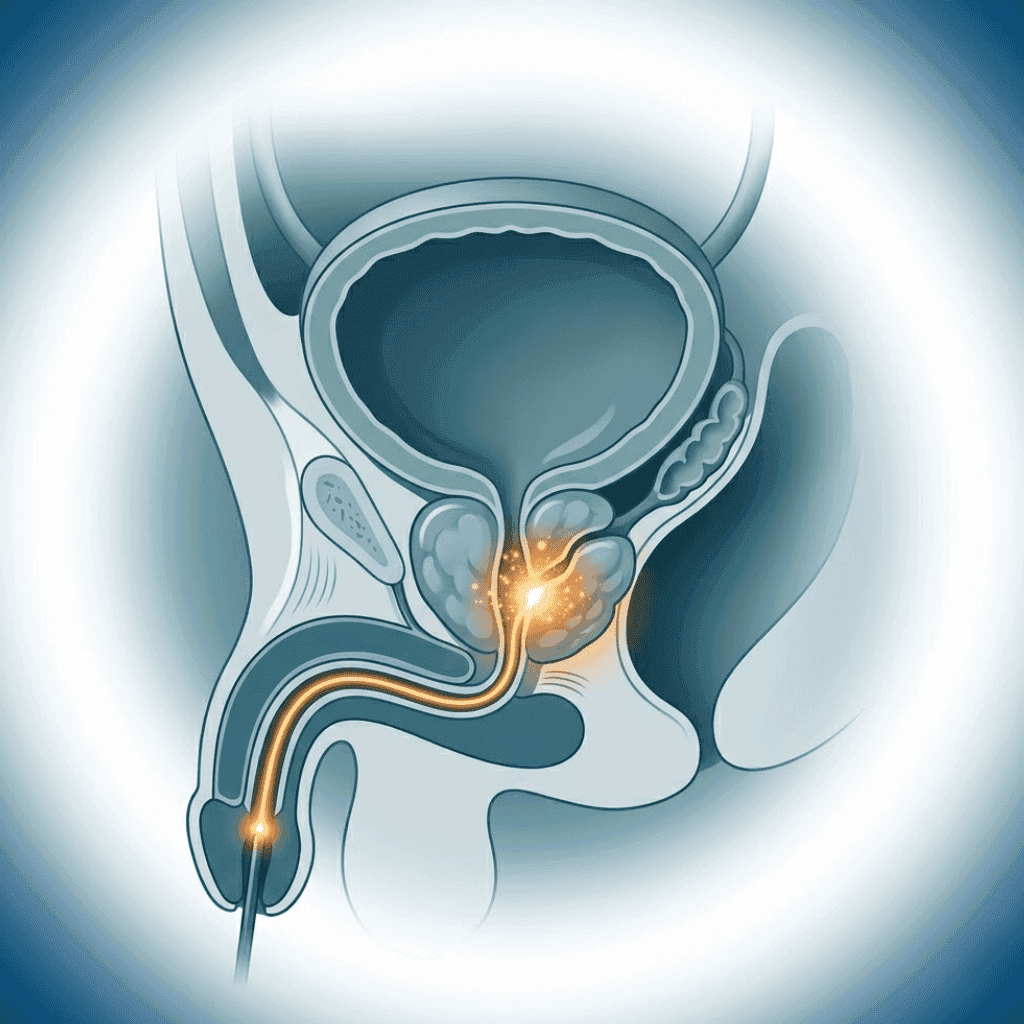
Chronic prostatitis, also called chronic pelvic pain syndrome (CP/CPPS), is one of the most common reasons young and middle-aged men see a urologist. It causes pain in the pelvis, perineum or genitals for three months or more, often with urinary or sexual symptoms. It is rarely dangerous, but it can affect quality of life, and it improves with the right combination of treatments.
Types of prostatitis
| Type | Features |
|---|---|
| Acute bacterial prostatitis | Sudden fever, chills, painful urination; needs urgent antibiotics |
| Chronic bacterial prostatitis | Repeated urinary infections with the same bacteria |
| Chronic pelvic pain syndrome (CP/CPPS) | Pain for over three months without a proven infection: the most common type |
| Asymptomatic inflammatory prostatitis | Found on tests, no symptoms; usually no treatment needed |
Symptoms
- Pain or pressure in the perineum (between scrotum and anus), lower abdomen, testicles, penis tip or lower back
- Burning or discomfort while passing urine; frequency and urgency
- Pain during or after ejaculation
- Weak or interrupted stream
- Symptoms that flare with stress, long sitting or cycling
Why it happens
In most men no single cause is found. Contributors include tight, overactive pelvic floor muscles, previous infection, inflammation, nerve sensitivity and stress. This is why antibiotics alone often do not work.
Tests
- Urine test and culture, sometimes before and after prostate massage
- Ultrasound and post-void residual urine; uroflowmetry for flow
- PSA in older men where appropriate
- Tests for sexually transmitted infections if relevant
Treatment plan
- Antibiotics only when infection is proven or likely.
- Alpha-blockers such as tamsulosin for urinary symptoms.
- Anti-inflammatory medicines for pain.
- Pelvic floor physiotherapy to relax tight muscles, often the most helpful step.
- Lifestyle: avoid prolonged sitting and cycling; warm sitz baths; limit alcohol, caffeine and spicy food if they trigger flares.
- Stress management and treating anxiety or poor sleep.
Most men improve with a combination of these over weeks to months. If symptoms affect sexual health, see andrology & sexual health.
Frequently asked questions
Is chronic prostatitis contagious?
Chronic pelvic pain syndrome is not an infection and is not passed to a partner.
Does prostatitis cause prostate cancer?
No. It does not cause cancer, though it can temporarily raise the PSA level.