
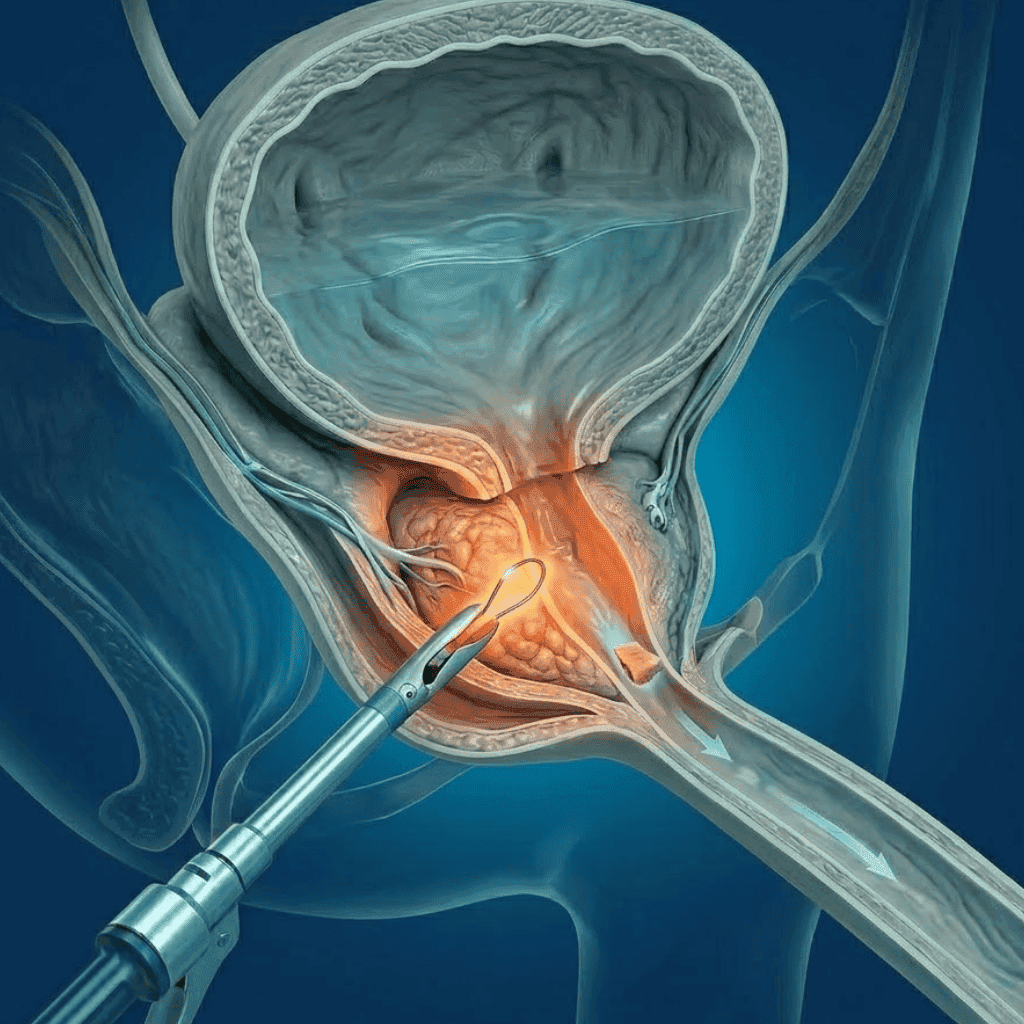
Cystoscopy lets a urologist look directly inside the urethra and bladder with a thin telescope called a cystoscope. It is one of the most useful tests in urology and is usually quick and well tolerated.
Why cystoscopy is done
- Blood in the urine (haematuria), to rule out bladder cancer
- Repeated urinary infections without a clear cause
- Urinary symptoms such as frequency, urgency or poor flow
- Suspected urethral stricture or bladder stones
- Follow-up after treatment of bladder tumours
- To place or remove a ureteric stent
Flexible vs rigid cystoscopy
| Flexible | Rigid | |
|---|---|---|
| Anaesthesia | Local anaesthetic gel | Usually spinal or general |
| Used for | Diagnosis, stent removal, follow-up | Biopsy, treating tumours or stones |
| Time | A few minutes | Depends on the procedure |
What happens
- You pass urine and lie on the couch; the area is cleaned.
- Anaesthetic gel numbs the urethra (or you have anaesthesia for rigid cystoscopy).
- The cystoscope is passed gently into the bladder, which is filled with sterile water to see clearly.
- The doctor examines the lining; small biopsies may be taken.
Does cystoscopy hurt?
Most people describe flexible cystoscopy as uncomfortable rather than painful, with a feeling of needing to pass urine. It is over in a few minutes.
After cystoscopy
Mild burning, frequency and a little blood in the urine are common for a day or two. Drink plenty of fluids. Contact the clinic if you develop fever, can’t pass urine, or see heavy bleeding with clots.
Related: early signs of bladder cancer and urology cancer surgery in Jaipur.
Frequently asked questions
How long does cystoscopy take?
A flexible diagnostic cystoscopy usually takes about five minutes.
Can I drive home after cystoscopy?
After flexible cystoscopy with local gel, usually yes. After anaesthesia, arrange for someone to take you home.