
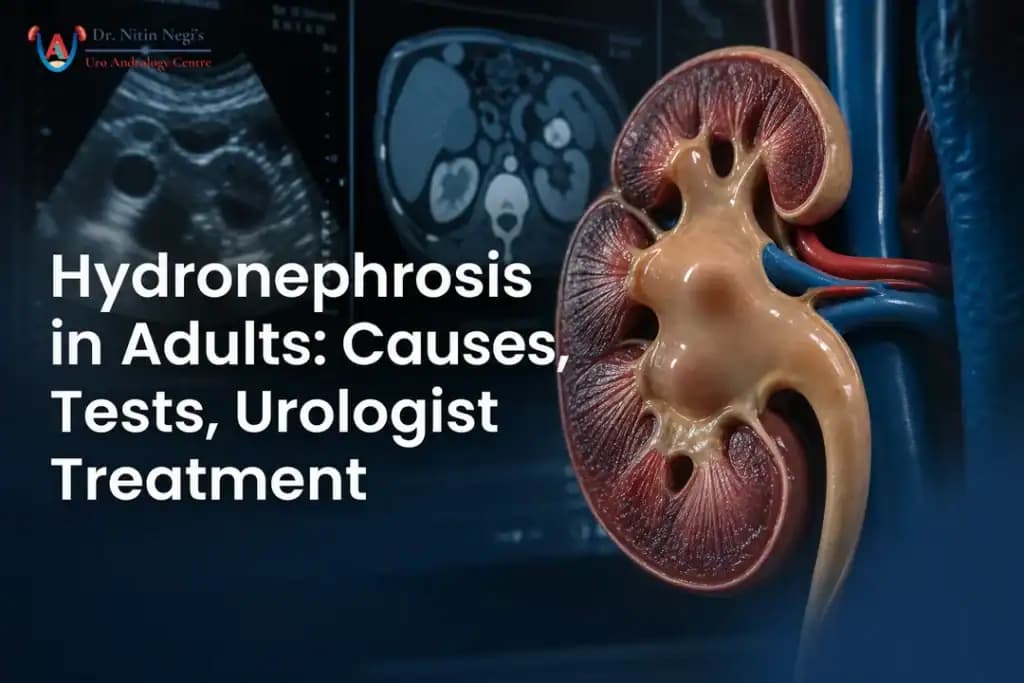
Hydronephrosis in Adults: Causes, Tests, Urologist Treatment is a condition many people hear about only after an ultrasound. If this sounds familiar, don’t panic; timely urologist treatment and clear guidance can protect kidney function and ease symptoms.
What Is Hydronephrosis in Adults?
Hydronephrosis means one or both kidneys swell because urine cannot drain freely. Pressure then builds inside the kidney, which stretches the renal pelvis and calyces. Over time, high pressure can reduce how well the kidney filters blood. Because of this, early evaluation matters even when pain is mild.
In our Jaipur practice, we often meet adults who felt fine until a routine scan showed swelling. Sometimes a small stone blocks a ureter. Other times, the cause relates to prostate enlargement or a prior surgery scar. With the right steps, most adults recover kidney function well.
Causes and Risk Factors You Should Know
Obstructive causes: stones, stricture, prostate
Kidney stones are a leading trigger. According to the U.S. National Institute of Diabetes and Digestive and Kidney Diseases, about 11% of men and 6% of women experience a stone at least once in their lives, which raises obstruction risk. You can review those figures on the NIDDK kidney stones page. Stones can lodge anywhere along the ureter and block urine. Additionally, ureteric strictures may form after infection, injury, or surgery. In men over 50, benign prostatic hyperplasia (BPH) can narrow the urinary channel and slow bladder emptying. Eventually, back pressure can affect the kidneys.
Less commonly, tumors in the bladder, ureter, cervix, or colon compress the urinary tract. Although this scenario is rarer, your doctor will consider it if there is blood in urine, weight loss, or persistent pain. Therefore, complete evaluation remains essential.
Non-obstructive and functional causes
Not every case involves a physical blockage. Vesicoureteral reflux allows urine to flow backward from the bladder to the kidneys. Neurogenic bladder, diabetes-related nerve issues, and certain medications can also weaken bladder contractions. As a result, urine pools and stretches the system. Pregnancy can temporarily dilate ureters as well, yet that pattern differs from adult non-pregnancy causes.
Chronic kidney disease and recurrent infection may play a role too. For broad kidney health context, the World Health Organization’s page on chronic kidney disease explains how systemic conditions threaten filtration over time.
Tests and Diagnosis: From Ultrasound to Renal Scan
Doctors begin with a detailed history and a focused exam. Next, we confirm the diagnosis and look for what is blocking flow. We also assess the impact on each kidney. Importantly, tests should be tailored to symptoms and risk factors rather than used in a one-size plan.
How diagnosis is confirmed
Ultrasound usually comes first because it avoids radiation and shows dilation well. It also reveals stones near the kidney, hydronephrosis grade, and bladder residual urine. When the picture is unclear, we add a CT scan or CT urography to map stones or strictures accurately. In selected cases, a MAG3 or DTPA renal scan measures drainage and split renal function. Meanwhile, urine tests check infection or blood, and blood tests assess creatinine to gauge kidney performance. For hydronephrosis basics, see the MedlinePlus overview of hydronephrosis.
Key markers your doctor checks
We look at pain pattern, fever, and vomiting because they suggest urgent blockage. We review fluid intake, medicines, and any stone history. We also check post-void residual on ultrasound when bladder outlet obstruction is suspected.
When to Seek urologist treatment
Do not wait if you have severe flank pain, fever with chills, or nausea. Those signs can mean infected obstruction, which needs emergency drainage. If your ultrasound report mentions moderate to severe hydronephrosis, schedule urologist treatment promptly to prevent lasting damage.
- Persistent one-sided or colicky flank pain
- Burning urine, fever, or foul smell from a suspected infection
- Visible blood in urine or repeated microscopic blood
- Reduced urine output, especially with swelling in legs
- New urinary retention, weak stream, or frequent night urination
Choosing the right urology doctor in Jaipur
Look for a team skilled in stones, BPH, and minimally invasive procedures. Experience with endoscopic laser surgery and stent placement also matters. For guidance or appointments, visit the Dr. Nitin Negi Urology Clinic website. You can also learn about treatments and recovery on the same site by exploring services from this trusted Jaipur urology specialist.
urologist treatment Options and Recovery
Treatment follows the cause, the severity of swelling, and kidney function. We first control pain and infection, then we relieve the blockage. After that, we plan definitive therapy to stop recurrence. Because every person is different, plans can vary in timing and steps.
Stents and nephrostomy: In emergencies, we place a ureteral stent through a small endoscope or insert a percutaneous nephrostomy tube to drain urine. This move quickly protects the kidney and controls infection. Later, we remove the tube or stent after fixing the root cause.
Stone management: Many stones need endoscopic removal. For small ureteric stones, we may try medical expulsive therapy briefly. However, persistent pain or infection favors early intervention. Options include ureteroscopy with laser lithotripsy and, for large kidney stones, mini-percutaneous nephrolithotomy. Our team performs laser kidney stone surgery with tiny incisions to minimize downtime.
Prostate and bladder outlet relief: When BPH drives back pressure, we improve flow with medicines or surgery. Medicines relax the prostate and reduce swelling. If symptoms remain troublesome or retention develops, we consider endoscopic prostate surgery. Laser prostate surgery often enables faster recovery and less bleeding compared with older methods. That said, outcomes depend on prostate size, bleeding risk, and your health status.
Stricture solutions: Short ureteric strictures may be dilated or incised endoscopically. Complex or long strictures can need reconstructive surgery. We decide using imaging, endoscopic assessment, and your goals. Importantly, we plan follow-up to monitor for recurrence.
Infections and reflux: We treat infections with targeted antibiotics based on culture. If reflux or neurogenic bladder contributes, we coach timed voiding, hydration, and sometimes intermittent catheterization. Because of this, bladder health becomes a core part of the plan.
Aftercare and recovery: Most patients resume light activity within days after endoscopic procedures. Nevertheless, we advise hydration, short walks, and prompt review if pain or fever returns. Your care team schedules a follow-up ultrasound to confirm resolution. In many cases, urologist treatment includes preventive counseling to avoid future stones or urinary problems.
What Patients Often Ask
“Will my kidney recover?” In many adults, kidneys improve once pressure falls and infection clears. However, severe or long-standing obstruction can cause lasting impairment. We track creatinine and follow imaging to judge recovery progress.
“Can I avoid surgery?” Sometimes, yes. For tiny stones close to the bladder, watchful waiting with medicines may work. For BPH, medicines can ease symptoms. Even so, if pain, infection, or kidney strain persists, procedures may offer faster and safer relief.
“Is ultrasound enough?” It is the best starting test. Yet, complex cases need CT or a renal scan to map anatomy and drainage. Therefore, we tailor tests to your situation rather than apply a rigid protocol.
Prevention Tips and Kidney-Safe Habits
Prevention focuses on stone control and healthy urine flow. First, drink enough water to keep urine pale. Second, limit excess salt, sugary drinks, and very high-oxalate foods if stones run in the family. Third, stay active and maintain a healthy weight. In addition, review medicines that may promote stones or retention.
For people with a history of stones, we sometimes request a 24-hour urine test. This test helps us personalize diet and supplements. Because risk patterns differ, tailored advice usually works better than generic tips.
Clinical note from our team: We often see adults arrive late because early pain settled on its own. However, silent obstruction can still harm a kidney. If your report mentions hydronephrosis, schedule a review even if you feel well.
Red Flags That Need Same-Day Care
Seek urgent help if you notice high fever, rigors, or vomiting with flank pain. Also, do not delay if you stop passing urine or develop severe, unrelenting pain. These scenarios may require immediate drainage before definitive therapy. Timely urologist treatment in such cases reduces complications and protects long-term kidney health.
Conclusion: Act Early to Protect Kidney Function
Hydronephrosis signals a plumbing problem in the urinary tract. Thankfully, modern diagnosis and minimally invasive surgery offer excellent outcomes when treated on time. If your scan or symptoms raise concern, arrange urologist treatment without delay. For compassionate, evidence-based care, our Jaipur team guides you from diagnosis through recovery while respecting your goals. Treatment choices vary by cause and health status, so a personalized plan works best.
Contact Dr. Nitin Negi, Urologist in Jaipur
📞 Phone: 9145888224, 9649888222
🏥 Hospital Address: MangalamPlus Medicity, Jaipur
🏥 Clinic Address: VS MediHUB,Jaipur