
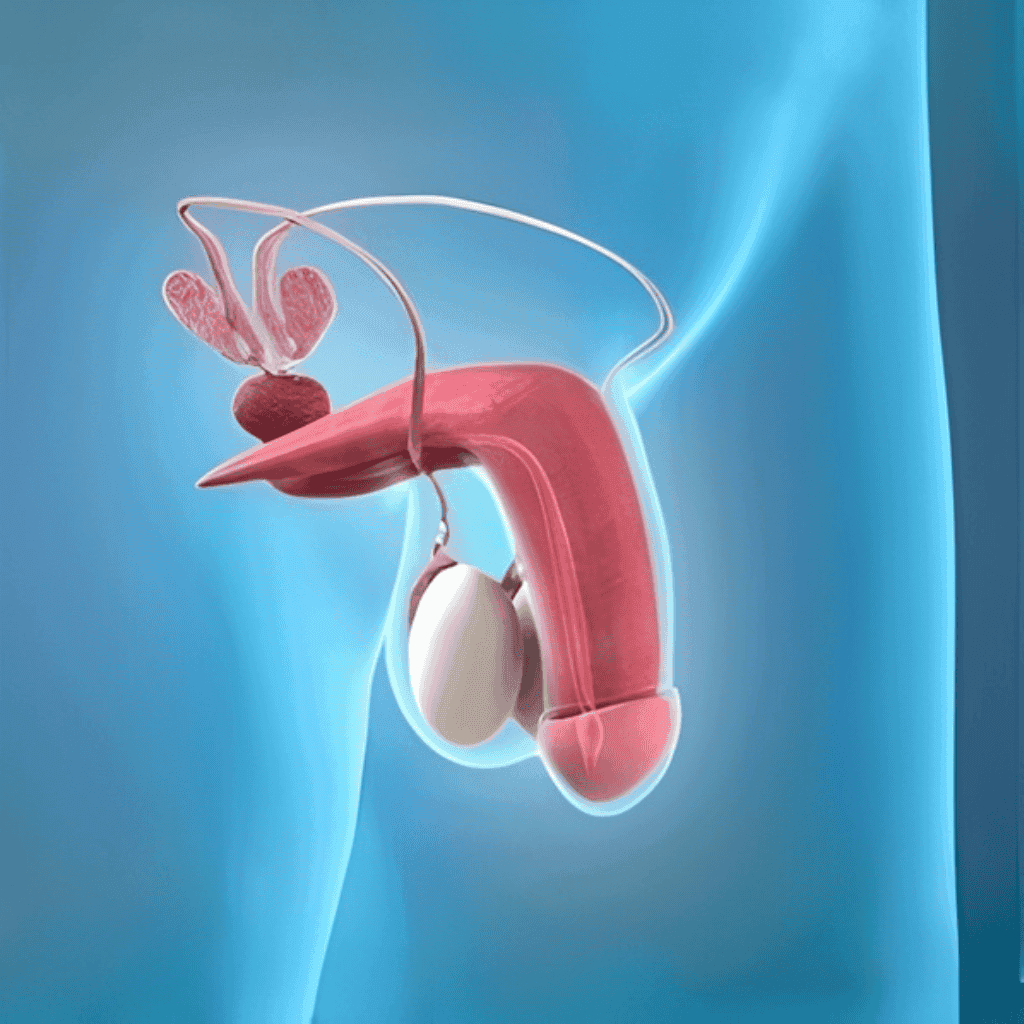
Peyronie’s disease is a condition in which scar tissue (a plaque) forms inside the penis, causing it to bend, narrow or shorten during erections. It affects a small but significant proportion of men, mostly over 40, and many delay seeking help out of embarrassment. It is a recognised medical condition with effective treatments.
Symptoms
- A curve or bend during erection, upwards, downwards or sideways
- A hard lump that can be felt along the shaft
- Pain during erections, especially early on
- Shortening or an hourglass narrowing
- Difficulty with intercourse, and sometimes erection problems
Two phases
| Phase | What happens | Typical approach |
|---|---|---|
| Active (acute) | First 6-12 months: pain, changing curve | Pain relief, monitoring, traction; avoid surgery |
| Stable (chronic) | Pain settles, curve stops changing for 3+ months | Treatment based on how much the curve affects intercourse |
Causes
It is thought to follow small, often unnoticed injuries to the penis during sex or activity, with abnormal scar healing. Risk is higher with diabetes, smoking, older age and a family tendency to similar scarring, such as Dupuytren’s contracture of the hand.
Treatment options
- Observation when the curve is mild and intercourse is possible.
- Medicines for pain and to support erections.
- Traction or vacuum devices that may reduce curvature and preserve length.
- Injections into the plaque in selected men.
- Surgery for a severe, stable curve that prevents intercourse: plication (straightening on the opposite side), plaque incision with grafting, or a penile implant when erections are also poor.
When to see an andrologist
See a specialist early, during the painful phase, to confirm the diagnosis, measure the curve and plan treatment. Read more about andrology in Jaipur and erectile dysfunction treatment.
Frequently asked questions
Can Peyronie’s disease go away on its own?
Pain usually settles, and a small number of curves improve, but most curves stay the same or worsen without treatment.
Is Peyronie’s disease cancer?
No. It is benign scar tissue and does not turn into cancer.