
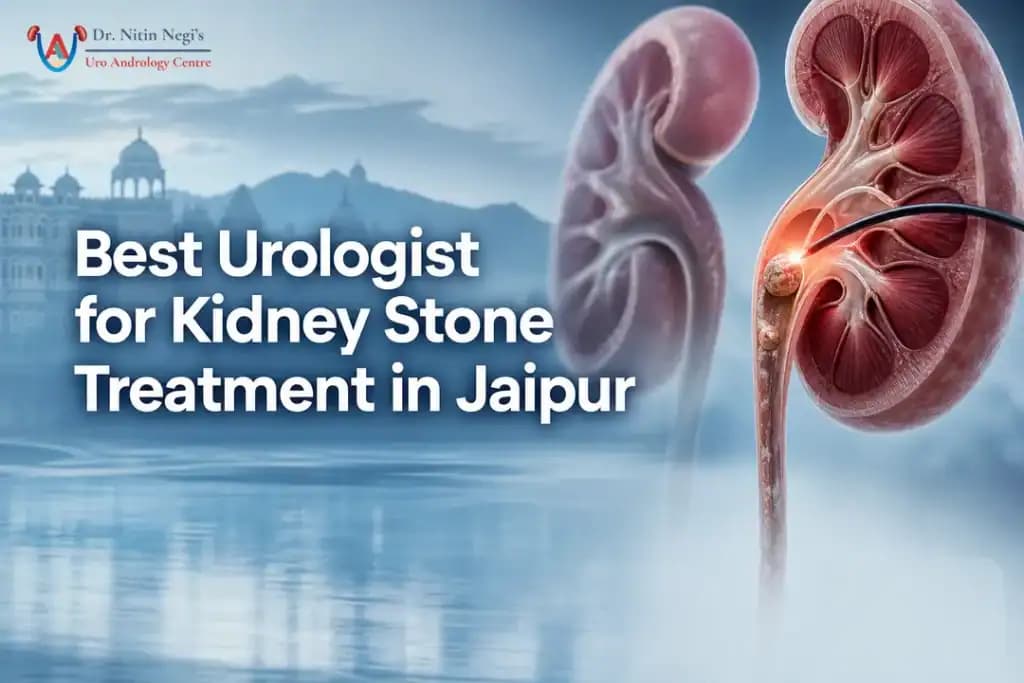
Best Urologist for Kidney Stone Treatment in Jaipur is more than a search term; it is your health decision. If you need a urologist for kidney stone relief, this guide explains symptoms, tests, and modern laser surgery, so you can act with confidence.
Kidney stones explained: causes, types, and risks
Kidney stones form when minerals and salts crystallise in urine. Dehydration, high sodium intake, and family history raise the risk. Calcium oxalate is the most common type, though uric acid, struvite, and cystine stones also occur. Your diet, fluid intake, and certain medicines influence both formation and recurrence.
According to the National Institute of Diabetes and Digestive and Kidney Diseases, about 11% of men and 9% of women will have a stone during their lifetime. You can read the background on the NIDDK overview here: kidney stone facts from NIDDK. This high lifetime risk explains why early guidance matters.
In our daily work in Jaipur, we often see people arrive after days of pain. When we check their scans, many have small stones that respond well to timely, targeted care. Because of this, we encourage early evaluation. Prompt action usually reduces pain, recovery time, and time off work.
Symptoms you should never ignore
Kidney stone pain typically starts in the flank or back. It may shoot to the lower abdomen or groin. Nausea, vomiting, or burning while urinating can follow. Blood in urine is common. Fever with chills suggests infection, which needs urgent attention.
- Severe, cramping pain in waves
- Pink, red, or brown urine
- Frequent urge to urinate with small volumes
- Nausea or vomiting during pain spikes
- Fever or chills, especially with pain
When to visit a urologist for kidney stone
Seek care immediately if you have severe pain that will not settle, fever, or vomiting that prevents fluids. Also visit if you have one kidney, are pregnant, or have a history of complex stones. Early evaluation protects kidney function and prevents complications.
Red flags requiring same-day care
Call or go to the emergency department if pain partners with fever, if you cannot pass urine, or if you feel faint. These signs may mean infection or blockage that needs urgent treatment.
Meanwhile, drink small sips of water if you can tolerate them. Avoid heavy painkillers without medical advice. Proper imaging and a focused plan make the difference.
Diagnosis and care pathway in Jaipur
We start with a focused history and a physical exam. Then we order urine tests to detect blood, crystals, or infection. We also check kidney function with blood tests. This baseline helps us choose safe pain control and the right procedure, if required.
How we evaluate stones step by step
First, we confirm the stone and its location. For many patients, a non-contrast CT scan maps the stone with excellent detail. Guidelines from the American Urological Association describe CT as the standard for accurate stone detection; see the AUA surgical management guideline. In selected cases, ultrasound is helpful, especially to avoid radiation in younger people and during pregnancy.
Second, we size the stone. Size and position guide whether medicines, shock wave therapy, ureteroscopy, or percutaneous procedures suit you best. Third, we check for infection. If infection is present, we drain the kidney before removing the stone. This sequence keeps treatment safe.
For small stones, we may advise observation with pain relief, hydration, and medical expulsive therapy. We also counsel on salt reduction and balanced fluids. The World Health Organization highlights public health goals for lower sodium intake; reducing salt supports overall kidney health. Read more here: WHO guidance on salt reduction.
Laser kidney stone surgery: what to expect
Many patients ask about lasers. We use laser energy during ureteroscopy to dust or fragment stones inside the ureter or kidney. A tiny scope travels through the natural urinary passage, so there are no cuts on the skin. Because of this minimally invasive route, most people return home the same day.
During flexible ureteroscopy, we guide a fine laser fiber to the stone. Holmium:YAG and newer thulium fiber lasers are common technologies. We either dust the stone into powder or break it into removable pieces. The choice depends on stone size, hardness, and location. We may place a small internal stent temporarily to help urine drain and to prevent swelling discomfort.
In our operating rooms, we routinely finish laser procedures within an hour for straightforward stones. However, complex anatomy or multiple stones can extend the time. We explain the plan before surgery so you know what to expect.
Recovery and aftercare timeline
You can usually drink fluids two to three hours after surgery. Light meals follow soon after. Most people resume desk work in two to three days. If we place a stent, you may feel urgency or back pressure while urinating. These sensations improve once we remove the stent.
We schedule a follow-up to confirm clearance with ultrasound or X-ray, depending on stone type. We also discuss recurrence prevention. A few simple habits reduce future risk.
- Drink enough water to pass clear, pale urine
- Limit added salt in cooking and packaged foods
- Moderate animal protein intake and avoid crash diets
- Balance calcium in food; do not restrict dairy without advice
- Stay active and maintain a healthy body weight
For larger stones in the kidney, percutaneous nephrolithotomy (PCNL) may be superior. We make a small keyhole in the back to remove big burdens efficiently. Shock wave lithotripsy (SWL) is another option for selected small to medium stones. Each method has trade‑offs, which we discuss clearly before any procedure.
Choosing a urologist for kidney stone in Jaipur
Experience, technology, and clear communication matter. At Dr. Nitin Negi’s Uro Andrology Centre, we combine advanced imaging, flexible scopes, and precision lasers with compassionate counselling. We tailor care to your stone’s chemistry, size, and location rather than pushing a one‑size approach.
From our first meeting, we explain your scans in simple language. We show you how size and position direct the plan. For example, an 8 mm mid‑ureter stone often clears quickest with ureteroscopy and laser dusting. In contrast, a 3–4 mm distal stone may pass with medicines and watchful follow‑up. Because results vary with anatomy and lifestyle, we personalise every step.
We also focus on prevention. After stone analysis, we suggest diet and fluid goals you can sustain at home. For ongoing reading and clinic updates, visit the clinic homepage. Simple changes today protect your kidneys for the long term.
Importantly, surgery is not the only yardstick of quality. We measure success by pain control, safe recovery, and fewer recurrences. Therefore, we recommend the least invasive method that still achieves complete stone clearance.
Costs, comfort, and practical tips
Patients often ask about pricing and discomfort. We keep costs transparent and discuss options in advance. Local anaesthesia, spinal anaesthesia, or general anaesthesia each has a role; we choose the safest method for your case. Most laser procedures cause mild burning for a day or two. Over‑the‑counter medicines and hydration usually ease this.
Bring previous reports to your first visit. If you cannot find them, do not worry. We can reconstruct the needed information during evaluation. Meanwhile, avoid high‑dose vitamin C and overuse of painkillers without guidance. These steps keep you safe while we plan treatment.
Frequently asked questions
Will I need a stent? Sometimes yes. We use a stent when swelling or small residual fragments might slow drainage. We remove it quickly in clinic.
Can diet alone dissolve stones? Not usually. Uric acid stones may shrink with urine alkalinisation and diet, but most stones need a procedure if they obstruct or cause ongoing pain.
How soon can I travel? Many patients travel within a week after straightforward ureteroscopy. However, long trips soon after PCNL may feel uncomfortable. We time travel around your comfort and follow‑up schedule.
What about recurrence? After one stone, your risk rises. We reduce that risk with hydration targets, salt control, and tailored diet advice. Continued follow‑up keeps you on track.
Safety first: our clinical protocol
Patient safety sits at the core of every decision. We screen for infection and treat it before any procedure. We review medicines, allergies, and medical conditions carefully. Our team checks instruments and energy settings in a strict pre‑surgery checklist. Because of this discipline, complications remain uncommon, and recovery stays smooth for most people.
We also teach you how to read warning signs after discharge. If you develop fever, severe pain, or difficulty urinating, you contact us at once. Early communication avoids emergency visits and protects your kidneys.
Finally, we keep education simple. We replace jargon with clear words. We draw diagrams of your urine flow and stone position so your family can follow the plan too.
Balanced takeaways and next steps
Kidney stones cause intense pain, but modern care offers fast relief. Accurate diagnosis, a personalised procedure, and smart habits prevent repeat events. Laser surgery through a natural passage often clears stones with minimal downtime. However, not every case needs an operation, and not every stone suits lasers. We decide together after reviewing your scans and goals.
If you are comparing specialists, look for clear explanations, transparent plans, and access to modern tools. A thoughtful team will guide you from first aid to long‑term prevention. Reach out with questions, visit for evaluation, and choose the path that fits your life. In short, when you need a urologist for kidney stone care, choose experience that puts safety and clarity first.
Contact Information
📞 Phone: 9145888224, 9649888222
🏥 Hospital Address: MangalamPlus Medicity, Jaipur
🏥 Clinic Address: VS MediHUB,Jaipur