
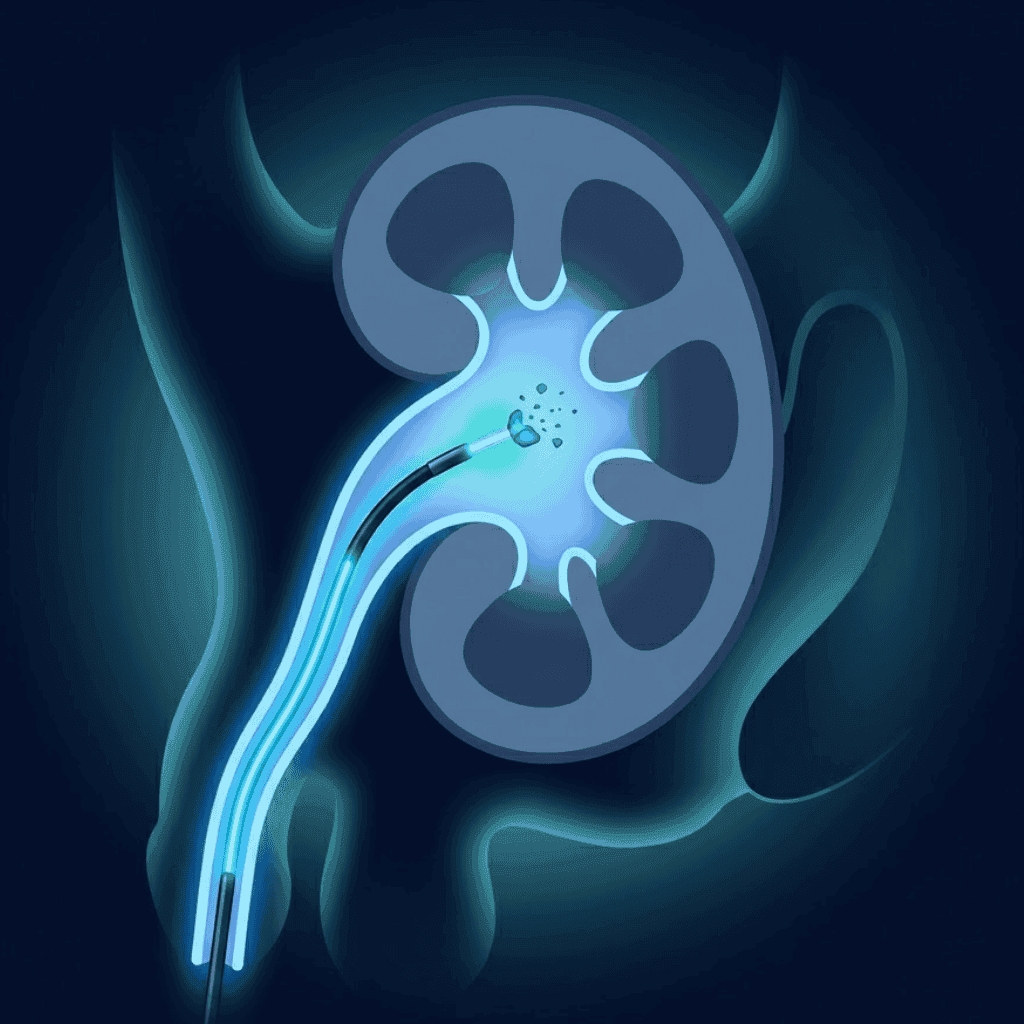
Gallstones and kidney stones are both called “stones” and both can cause severe pain, but they form in different organs, from different substances, and are treated by different specialists.
| Kidney stones | Gallstones | |
|---|---|---|
| Where they form | Kidney, may move into the ureter | Gallbladder |
| Made of | Usually calcium oxalate; also uric acid, struvite, cystine | Usually cholesterol, sometimes bile pigment |
| Typical pain | Severe side or back pain moving to the groin, comes in waves | Upper right abdomen, often after fatty meals, may reach the right shoulder |
| Other symptoms | Blood in urine, burning, urgency | Nausea, bloating; jaundice if a duct is blocked |
| Diagnosis | CT KUB, ultrasound, urine test | Ultrasound of the abdomen, liver tests |
| Specialist | Urologist | General or GI surgeon |
| Usual treatment | Fluids for small stones; laser RIRS, URS or PCNL | Laparoscopic gallbladder removal for symptomatic stones |
Can you have both?
Yes. They share some risk factors such as obesity, rapid weight loss and diabetes, and ultrasound sometimes finds both. Each is treated on its own merits.
Not sure which it is?
Pain in the side or back that spreads to the groin, especially with blood in the urine, points to a kidney stone. A CT scan settles it quickly. Kidney stones are also sometimes confused with appendicitis - see kidney stone or appendicitis. For stone treatment options, see laser kidney stone treatment in Jaipur.