
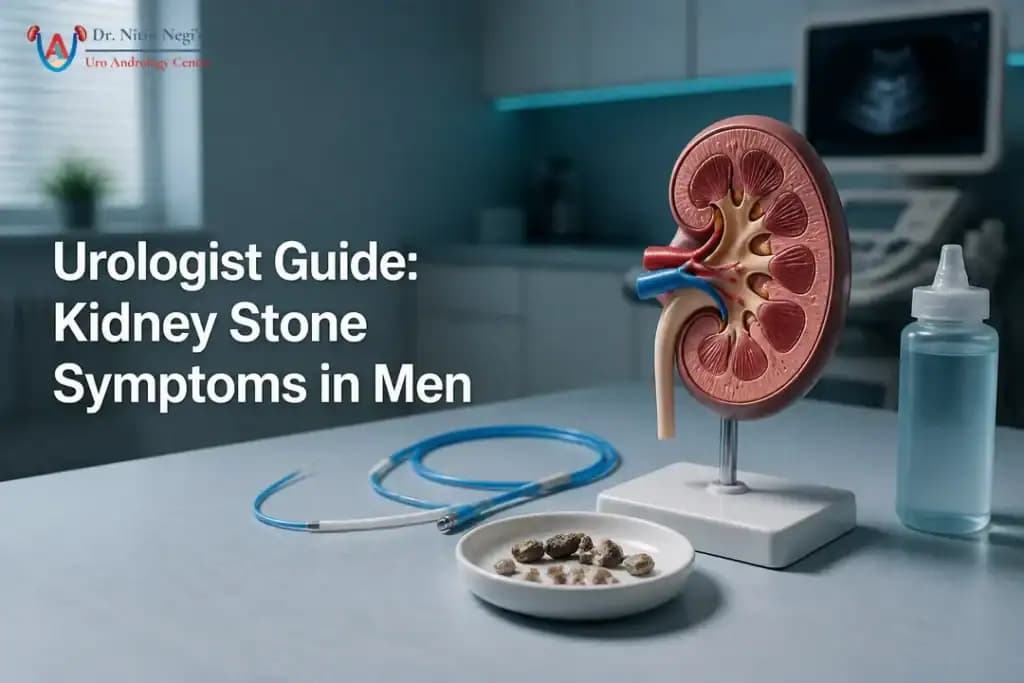
Urologist Guide: Kidney Stone Symptoms in Men explains the signs men often ignore and how a urologist decides what to do next. First, you will learn which symptoms suggest a stone versus a UTI or prostate issue. Next, you will know the danger signs that mean you should not wait at home. Finally, you will understand common tests and modern kidney stone treatment options.
Kidney Stone Symptoms in Men: What They Feel Like
Kidney stones can start quietly. However, once a stone moves into the ureter, pain can spike fast. Because of that, many men describe a sudden “can’t-get-comfortable” pain that keeps shifting.
Importantly, not every stone causes classic flank pain. Sometimes the first clue is blood in urine or urinary problems that look like a bladder infection. Therefore, it helps to know the full symptom pattern.
Typical Pain Patterns And Where Pain Travels
Most men feel pain on one side of the back or below the ribs. Next, the pain may travel toward the lower abdomen or groin. In addition, waves of pain often come and go as the ureter spasms.
Notably, the pain intensity does not always match stone size. A small stone can hurt badly if it blocks flow. Conversely, a larger stone can stay silent inside the kidney for some time.
How To Tell “Stone Pain” From Muscle Strain
With muscle strain, pain often worsens with a specific movement. In contrast, stone pain tends to feel deep and colicky. Moreover, many patients pace, shift posture, or cannot lie still.
Urine Changes: Blood, Burning, And Frequent Urges
Hematuria means blood in urine. Sometimes you see red or tea-coloured urine. Other times, only a lab test finds it. Because stones scrape the lining, bleeding can happen even without infection.
In addition, a stone near the bladder can trigger frequent urination and urgency. Burning urination may occur too. However, burning can also point to urinary tract infection, so evaluation matters.
When A Urologist Visit Becomes Urgent
Some symptoms mean you need quick medical help. Therefore, do not try to “push through” severe pain or fever. Early care can protect kidney health and reduce complications like hydronephrosis.
From our urology practice experience, men often wait because pain settles for a few hours. However, a temporary break does not always mean the blockage is gone. In fact, we repeatedly see patients arrive later with rising creatinine, infection risk, or urinary retention.
Red-Flag Symptoms That Need Same-Day Care
Seek urgent assessment if any of these occur. Importantly, combine symptoms raise risk even more.
- Fever, chills, or rigors with flank pain (possible infected obstruction)
- Severe vomiting or dehydration you cannot control at home
- Very low urine output or inability to pass urine (urinary retention)
- Known single kidney or history of kidney disease with new stone symptoms
- Uncontrolled pain despite prescribed medicines
Notably, fever with blockage can turn dangerous. For this reason, doctors treat it as an emergency and may decompress the kidney with a stent or nephrostomy before definitive stone removal.
Symptoms That Overlap With UTI, Prostate, Or Bladder Problems
Sometimes men assume they have “gas” or a back problem. Others assume it is a UTI or prostate issue. However, stones can mimic several urological disorders.
For example, urgency and burning can occur with a distal ureteric stone. Similarly, an enlarged prostate can cause weak stream and nocturia. Therefore, a urology doctor checks the full picture before deciding on antibiotics or prostate treatment.
Also, do not self-start leftover antibiotics. Instead, confirm infection with urine tests. This avoids resistance and missed diagnoses.
What A Urologist Checks: Tests And Diagnosis
A good evaluation looks beyond pain alone. First, your clinician checks vitals and hydration. Next, they review past stones, diet, and medicines. Then, they choose tests that show both the stone and kidney function.
Importantly, results vary depending on stone size, location, and whether infection is present. Therefore, your plan may differ from a friend’s plan even if symptoms feel similar.
Core Tests: Urine, Blood, Ultrasound, And CT
Urine routine and microscopy can show blood, crystals, and signs of infection. In addition, a urine culture helps when UTI symptoms appear. Blood tests can check kidney function and inflammation markers.
Ultrasound often serves as a first test in India. It can show hydronephrosis and larger kidney stones. However, it can miss small ureteric stones.
Therefore, doctors often use a non-contrast CT KUB when they need clarity. According to NCBI’s StatPearls overview of acute renal colic, non-contrast CT is widely used because it detects most stones quickly and helps guide management. Your urologist will still choose imaging based on age, radiation exposure concerns, and urgency.
Kidney Stone Treatment Options Men Commonly Need
Stone care has two goals. First, relieve obstruction and pain. Second, clear the stone and prevent recurrence. Because of that, your urologist may start with pain control and medical expulsive therapy, or move directly to a procedure.
In our day-to-day urology treatment work, we see men improve faster when they stop guessing and follow a clear plan. For instance, tracking fever, urine colour, and urine output helps us decide when to escalate care. Similarly, bringing prior imaging reports avoids delays.
Watchful Waiting Vs Active Removal
Small stones may pass on their own. Therefore, your doctor may advise fluids, pain relief, and a short course of an alpha-blocker when appropriate. Next, they schedule follow-up imaging to confirm passage.
However, waiting is not always safe. If the stone causes ongoing blockage, infection, or repeated ER visits, active treatment makes more sense. In that case, your urologist will discuss the least invasive option for your stone size and location.
Modern Procedures: Laser Kidney Stone Surgery And More
When stones do not pass, minimally invasive urology surgery can remove them. Common approaches include ureteroscopy with laser lithotripsy (often called laser kidney stone surgery), RIRS for kidney stones, and PCNL for larger stones. Your surgeon selects based on stone burden, anatomy, and infection status.
During ureteroscopy, a thin scope goes through the urine passage. Next, the laser breaks the stone into fragments. Then, the surgeon may place a temporary DJ stent to keep urine flowing while swelling settles.
For broader patient education on urinary health and prevention basics, you can also explore the resources on Dr. Nitin Negi’s urology clinic website. In addition, if you want to know the specialist’s approach and scope of care, see advanced urology care details here.
Preventing The Next Stone: Practical Habits For Men
Prevention often starts right after treatment. First, your urologist may ask you to strain urine and save the passed stone for analysis. Next, they may recommend a metabolic evaluation if stones recur, occur at a young age, or run in the family.
Importantly, different stones need different prevention strategies. Calcium oxalate stones, uric acid stones, and infection stones behave differently. Therefore, avoid copying a generic diet plan from the internet.
For example, the World Health Organization highlights the importance of hydration for overall kidney care and health. Along with that, daily fluid intake goals often need personal adjustment based on heat, work conditions, and medical history.
Use these patient-friendly habits as a starting point. Then, personalise them with your urology doctor:
- Hydrate consistently, especially during outdoor work or travel.
- Limit excess salt, because sodium can raise urinary calcium.
- Get adequate dietary calcium from food, since very low calcium can increase oxalate absorption.
- Moderate animal protein if you form uric acid stones or have high uric acid.
- Do not ignore recurrent UTI symptoms, because infection can contribute to certain stones.
In addition, review supplements with your clinician. High-dose vitamin C can increase urinary oxalate in some people. Likewise, certain gym or “fat burner” products can worsen dehydration.
Conclusion: Kidney Stone Symptoms In Men Need Timely Action
Kidney stone symptoms in men often start as pain, blood in urine, or sudden urinary problems. However, fever, vomiting, and reduced urine output can signal a true emergency. Therefore, consult a urologist early so you get the right tests and the safest kidney stone treatment.
While home measures can help mild cases, results vary with stone size, location, and infection risk. Because of that, a tailored plan matters more than generic advice. If you want clear guidance without pressure, you can book a consultation and discuss options from prevention to laser-based stone removal with an experienced urology team that treats these cases every day.
Contact Dr. Nitin Negi, Urologist in Jaipur
📞 Phone: 9145888224, 9649888222
🏥 Hospital Address: MangalamPlus Medicity, Jaipur
🏥 Clinic Address: VS MediHUB,Jaipur