
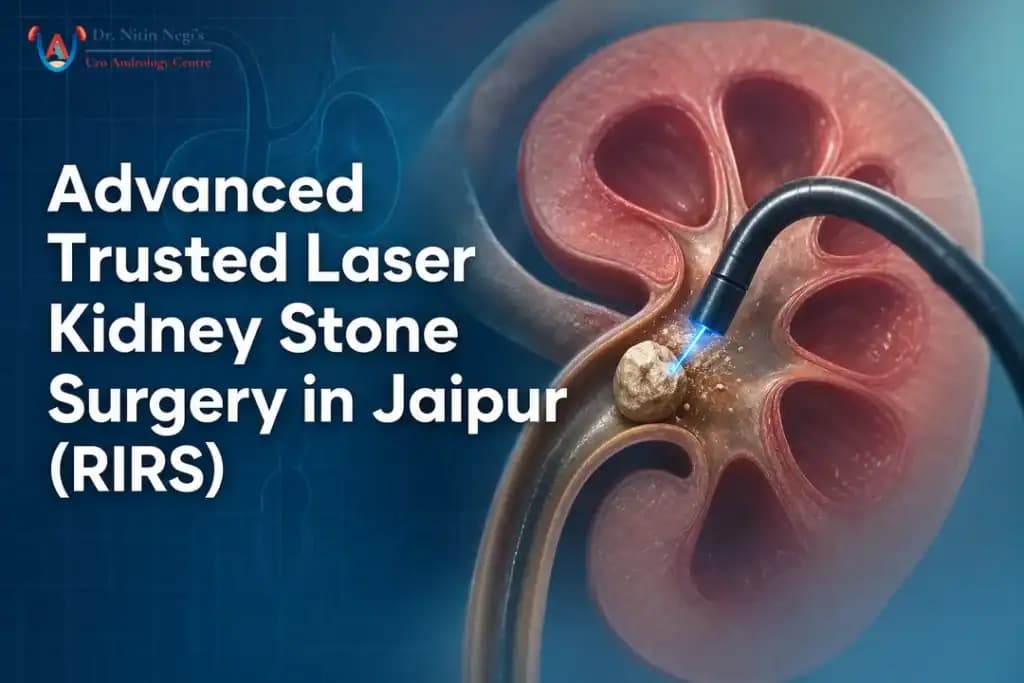
This guide—Advanced Trusted Laser Kidney Stone Surgery in Jaipur (RIRS)—gives you a clear, patient-first look at modern stone care. If you are considering laser kidney stone surgery, you will learn how RIRS works, who benefits, what recovery involves, and how to choose an experienced urologist in Jaipur.
What Is RIRS Laser Kidney Stone Surgery?
Retrograde Intrarenal Surgery, or RIRS, is a minimally invasive procedure that uses a flexible ureteroscope and a thin laser fiber to break stones inside the kidney. The surgeon enters through the natural urinary passage, so you avoid any skin cuts. Because the scope bends, it reaches even tricky calyces.
Unlike shock wave lithotripsy, which uses external sound waves, RIRS gives the surgeon a direct view of the stone. As a result, the laser energy targets the stone surface precisely. This accuracy helps reduce collateral tissue injury and shortens recovery time for many patients.
Kidney stones are common worldwide. Notably, the U.S. National Institute of Diabetes and Digestive and Kidney Diseases reports that about 11% of men and 6% of women experience a stone at least once in life (NIDDK overview of kidney stones). Therefore, knowing your treatment choices matters.
Who Is a Good Candidate in Jaipur?
RIRS suits many people with stones located in the kidney or upper ureter, especially when stones measure up to roughly 2 cm. Your urology doctor may also advise it if you have a hard stone that resisted shock waves, an anatomical variation, or a bleeding risk that makes larger keyhole surgery less suitable.
In our Jaipur practice, we see certain patterns. For example, working professionals often need a faster return to routine. Because RIRS requires no external incision, many resume desk jobs within days. However, very large stones or complex anatomy may still need other options like PCNL. Your surgeon will explain the trade-offs for your specific case.
People with diabetes, obesity, or on blood thinners often prefer this approach because it avoids a skin cut. Even so, your care team will individualize the plan. Importantly, pregnancy, active infection, and uncontrolled bleeding disorders require special consideration and timing.
Step-by-Step Procedure and Technology Used
On the day of surgery, you arrive fasting. After anesthesia, the surgeon gently passes a guidewire up the ureter. Next, a flexible ureteroscope follows that wire to the kidney. Continuous irrigation keeps the view clear while the team locates the stone.
How Flexible Ureteroscopy Reaches the Stone
The scope tip can deflect to navigate the delicate calyces. The surgeon steers under vision and often uses a thin access sheath to protect the ureter. Then, a laser fiber—about the size of a strand of hair—slides through the working channel to contact the stone.
For example, if the stone hides in a lower calyx, controlled deflection and gentle rotation allow stable targeting. This control reduces scope trauma and helps the surgeon work efficiently.
Laser Energy Settings and Stone Dusting
RIRS uses Holmium:YAG or newer pulsed systems to fragment or dust stones. The team selects energy and frequency based on hardness and size. Lower energy with higher frequency usually “dusts” soft stones into fine particles that pass naturally. Higher energy with lower frequency “fragments” hard stones into retrievable pieces.
Safety checks before firing the laser
Before activating the laser, the surgeon confirms fiber position, irrigation flow, and visibility. Consequently, the laser hits the stone face, not nearby tissue. Throughout the case, the anesthetist tracks your vitals while the assistant manages irrigation and equipment.
Guidelines from the American Urological Association support ureteroscopy with laser lithotripsy for many symptomatic stones, with high stone-free rates when used appropriately (AUA guideline on surgical management). That evidence helps patients weigh choices with confidence.
Benefits, Risks, and Recovery After RIRS
Benefits of laser kidney stone surgery at a glance
- No external incision, which typically means less pain and minimal scarring.
- Direct visualization of stones for precise treatment and fewer surprises.
- Suitability for multiple or hidden stones due to flexible navigation.
- Usually a short hospital stay; many go home the same day or next morning.
- Early return to work for many desk-based roles.
Despite its advantages, every procedure carries risks. You may feel burning while passing urine, see mild blood in urine, or feel flank discomfort for a few days. Sometimes, swelling needs a temporary ureteral stent to keep urine flowing.
Recovery Timeline and Activity Plan
Day 0–1: You pass clear fluids and walk short distances. Because movement helps, short walks speed recovery. If a stent is present, you may feel urgency or frequency; that sensation eases with time. MedlinePlus notes that stents commonly cause temporary bladder irritation symptoms (MedlinePlus: ureteroscopy and stents).
Days 2–7: Most patients return to light work. However, avoid heavy lifting. Continue hydration and prescribed medicines. If your doctor removed fragments, strain urine only if advised.
Week 2 onward: Many people resume normal activity. If you work a physically demanding job, ask your surgeon for a tailored plan. Finally, you attend follow-up for imaging and to discuss stone analysis and prevention.
Results vary based on stone size, hardness, and anatomy. Therefore, one person may achieve a stone-free kidney after a single sitting, while another may need a staged plan.
Costs, Choosing a Laser Stone Removal Expert, and When to Seek Help
Costs depend on hospital category, anesthesia, single-use disposables, laser type, and whether a stent is required. Because each case differs, an exact figure is only possible after evaluation. Nevertheless, you can ask for a detailed estimate that lists professional fees, device costs, room charges, and follow-up.
Experience matters. In our urology practice, we explain options using your imaging on the screen. We also discuss whether dusting or fragmentation best suits your stone’s hardness. This open conversation helps you weigh recovery time, possible stent symptoms, and the chance of needing a second sitting.
To choose a surgeon, consider the following:
- Training and regular experience with flexible ureteroscopy and lasers.
- Clear explanation of risks, benefits, and alternatives.
- Transparent cost breakdown and follow-up plan.
- Access to imaging, metabolic evaluation, and prevention counselling.
If you want trusted, patient-focused care, connect with Dr. Nitin Negi, Urologist Jaipur. You can also learn more about services and appointment slots at our urology clinic in Jaipur. We guide you through decision-making without pressure.
Seek urgent help if you develop fever, uncontrolled pain, inability to pass urine, or relentless vomiting. These signs may suggest obstruction or infection. Early evaluation protects kidney function.
Stone Prevention After Your Procedure
Prevention matters as much as removal. After RIRS, we typically order stone analysis and a basic metabolic evaluation. Based on results, we individualize diet and medical therapy. For instance, you may reduce sodium, maintain normal dietary calcium, and limit excessive oxalate sources like very large portions of spinach or nuts.
General tips help most people:
- Hydrate so your urine stays pale straw colored.
- Limit sugary drinks and added salt.
- Balance protein sources and include fruits rich in citrate, such as lemons.
- Take medicines exactly as prescribed to prevent recurrence.
Because climate and work habits affect risk, we also tailor strategies for Jaipur’s hot months. Short, frequent water breaks during outdoor tasks reduce concentrated urine and lower stone formation risk.
Frequently Asked Questions
Will I feel the laser? No. You are under anesthesia. The laser energy acts on the stone surface under direct vision.
Do all stones need surgery? Not always. Small stones may pass with medicines and hydration. Your doctor will monitor progress and advise the safest path.
How long does the surgery take? Duration varies with stone size and location. Small stones may need less than an hour. Multiple or hard stones take longer.
Can stones come back? Unfortunately, yes. Recurrence is common if prevention slips. That is why follow-up and lifestyle changes matter.
Where can I read trusted guidance? For a broad overview of kidney stones and risk factors, see the NIDDK resource cited above. Additionally, specialty guidelines from the AUA inform choices about when to use ureteroscopy and lasers. These sources complement a personalized plan with your surgeon.
In summary, RIRS offers targeted treatment with a quick recovery pathway for many patients. When your evaluation suggests it, laser kidney stone surgery can provide relief with minimal disruption to daily life.
Conclusion: Move Forward Confidently
Your options become clearer when you understand the process, benefits, and trade-offs. With evidence-backed care and a thoughtful surgeon, Advanced Trusted Laser Kidney Stone Surgery in Jaipur (RIRS) can be a safe, effective route for many. If you would like a balanced opinion, reach out for a consult. We will assess imaging, discuss goals, and, if suitable, plan laser kidney stone surgery with a focus on recovery and long-term prevention.
Contact Dr. Nitin Negi, Urologist in Jaipur
📞 Phone: 9145888224, 9649888222
🏥 Hospital Address: MangalamPlus Medicity, Jaipur
🏥 Clinic Address: VS MediHUB,Jaipur