
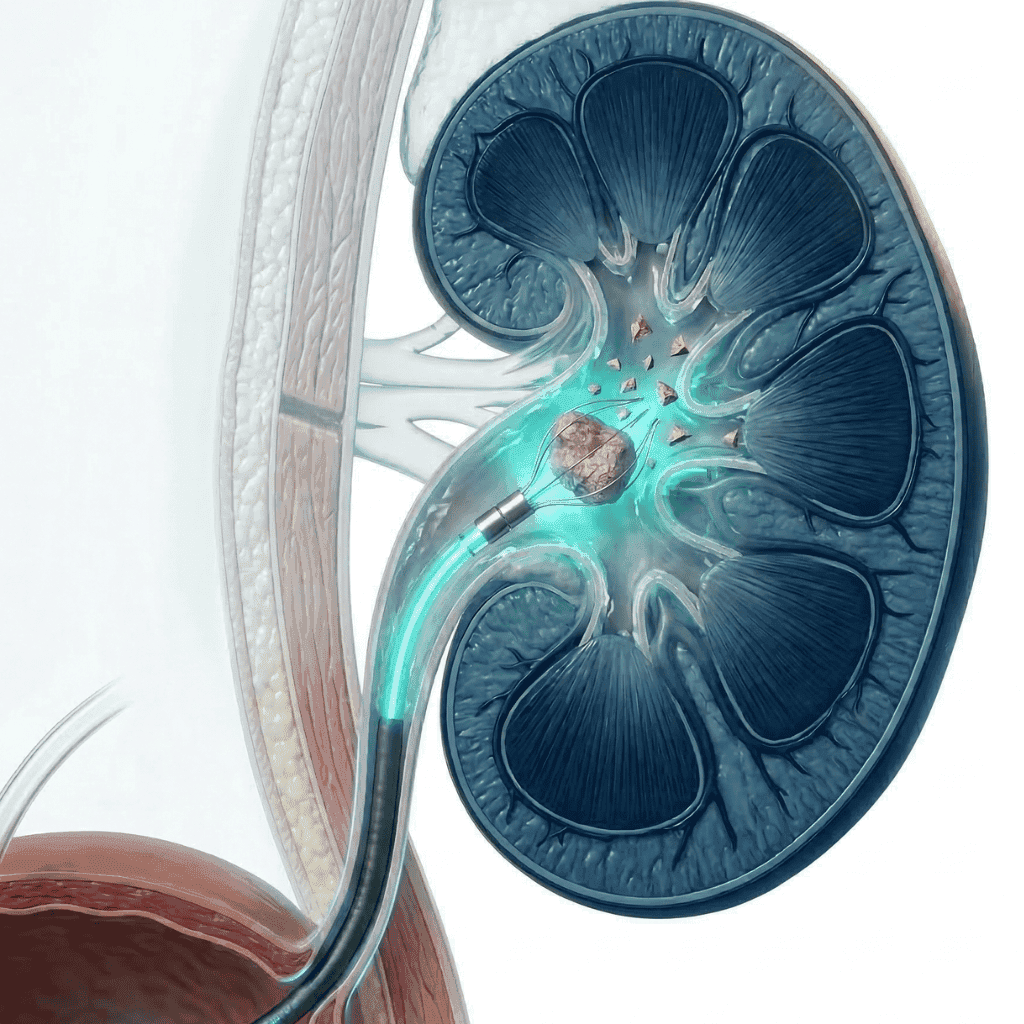
Small kidney stones often pass on their own. The size and position of the stone matter most, but a few practical steps can make the wait shorter and less painful. Here is what a urologist recommends, and what to avoid.
First, know your stone size
Stones under about 5 mm pass in most people within a few weeks; stones of 5-10 mm pass less often; larger stones rarely pass. A CT or ultrasound tells you where you stand. Read can a 5 mm stone pass?
What helps
- Drink steadily: enough water to keep urine pale, spread through the day. Gulping large volumes at once doesn’t push a stone out faster and can worsen pain.
- Control the pain: anti-inflammatory painkillers, if safe for you, also reduce ureter swelling.
- Ask about tamsulosin: it relaxes the lower ureter and helps many 5-10 mm stones pass. See the tamsulosin guide.
- Stay gently active: walking is fine; bed rest doesn’t help.
- Strain your urine: catch the stone in a tea strainer so it can be analysed.
- Lemon water: adds citrate; helpful for prevention.
What doesn’t help, or can harm
- Beer “to flush the stone” - dehydrates and adds uric acid
- Unregulated home remedies in large doses
- Waiting indefinitely: a stone that sits in the ureter for weeks can damage the kidney even if the pain fades
When to stop waiting
- Fever or chills (emergency)
- Pain not controlled with tablets, or repeated vomiting
- No progress after two to four weeks on scans
- A single kidney, pregnancy, or rising creatinine
Then URS laser treatment removes the stone without any cut, usually with a one-day stay.