
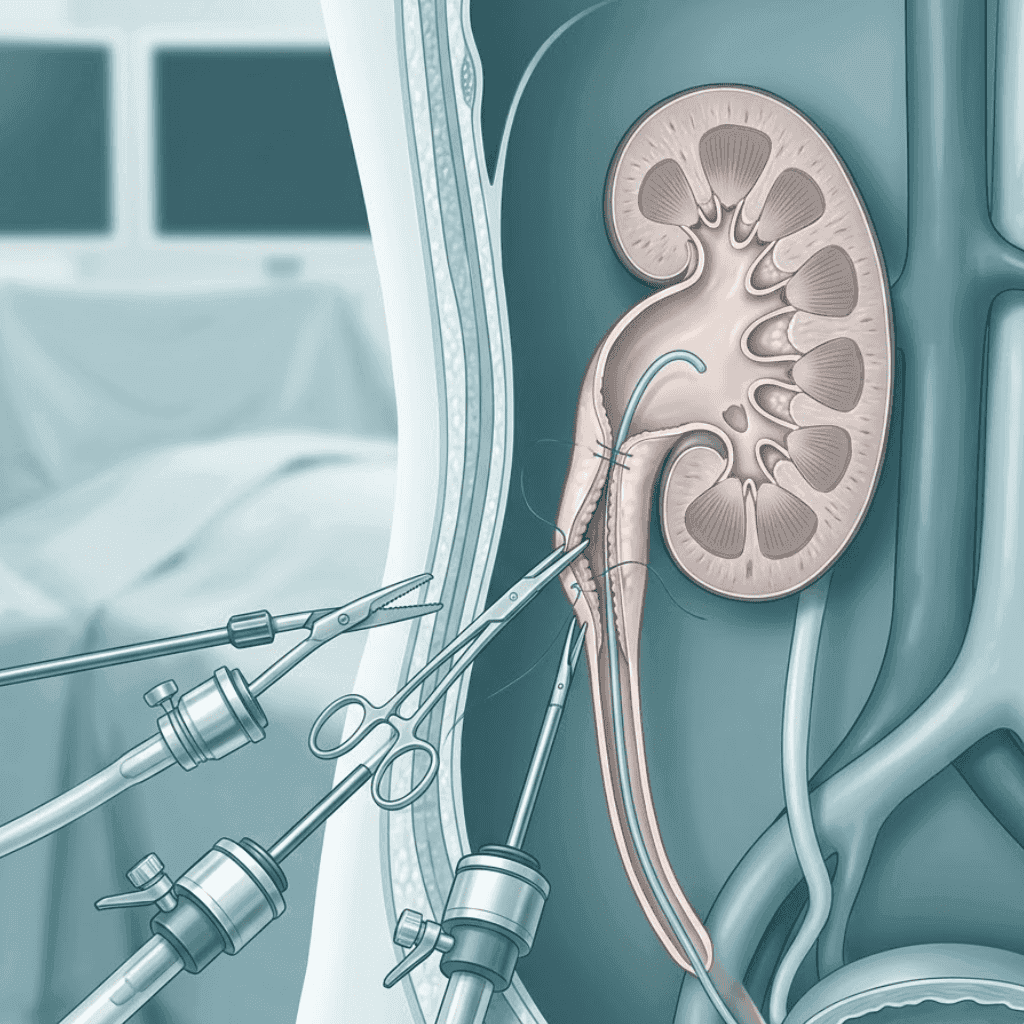
Most kidney stones are painful but not dangerous, and they pass or are treated without lasting harm. A stone becomes dangerous when it blocks the flow of urine for a long time, causes infection behind the blockage, or keeps recurring in someone whose kidneys are already weak.
How stones can damage the kidneys
- Long-standing blockage: back-pressure gradually reduces the kidney’s function, sometimes without much pain.
- Infection behind a blockage: can spread to the bloodstream (sepsis) within hours.
- Repeated stones and procedures over many years.
- Staghorn stones that fill the kidney and cause chronic infection.
Warning signs that need urgent care
- Fever or shivering with flank pain
- Very little or no urine
- Severe pain not controlled by tablets, or repeated vomiting
- A stone in a single kidney
Who is at higher risk
- People with only one working kidney
- Diabetes, high blood pressure or existing kidney disease
- Recurrent stone formers, especially with infection stones
- Stones that have been left in the ureter for weeks
Protecting your kidneys
- Get a scan after any stone episode, even if the pain settles.
- Treat stones that are not passing within two to four weeks.
- Check kidney function (creatinine/eGFR) if you have repeated stones. See checking kidney health.
- Follow a prevention plan based on your stone type.
Modern laser kidney stone treatment clears most stones without any cut, protecting the kidney. See also blocked urine pipe and kidney damage.