What is Laser Kidney Stone Treatment?
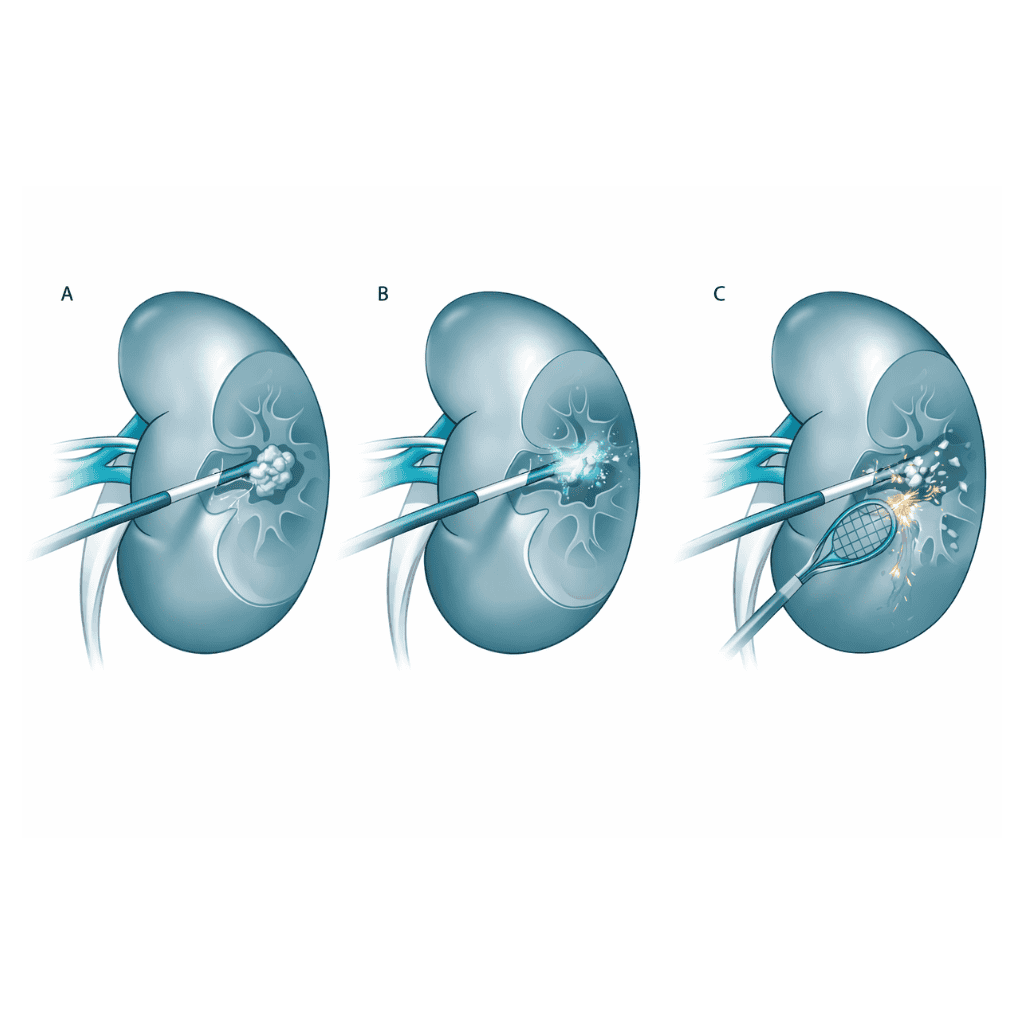
Laser treatment for kidney stones involves using a thin flexible scope passed through the urinary tract to locate and break stones using laser energy. In simple terms, the stone is broken into small fragments. After that, these fragments are either removed or passed naturally, making the procedure safe and highly effective.
When is Laser Treatment Recommended?
- Stones that are not passing naturally
- Severe pain or infection due to obstruction
- Stones larger than 5mm
- Multiple or recurrent kidney stones
- Failure of medications or other treatments
How Laser Stone Removal Works
Laser kidney stone treatment in Jaipur is usually performed using RIRS (Retrograde Intrarenal Surgery) or URS (Ureteroscopy). A flexible scope is inserted through the urinary tract to reach the stone without any cuts or stitches.
The procedure offers:
- No external incision
- Same-day or next-day discharge
- Quick recovery
Benefits of Laser Kidney Stone Treatment
- No incision or visible scars
- Minimal pain and faster recovery
- Daycare procedure in most cases
- Suitable for kidney, ureter, and bladder stones
- Precise targeting with minimal damage to surrounding tissues
- Lower risk of recurrence with complete stone removal
Why Choose Dr Nitin Negi for Laser Kidney Stone Treatment in Jaipur?
Dr Nitin Negi provides advanced laser kidney stone treatment in Jaipur with over 12+ years of experience in urology and minimally invasive surgeries. His approach ensures safe procedures, accurate diagnosis, and long-term relief.
Patients benefit from:
- Advanced RIRS and URS techniques
- High success rates
- Minimal complications
- Personalized treatment plans
Expert Urology Care You Can Trust
With years of surgical expertise, every treatment is customized based on stone size, location, and patient condition to ensure the best possible outcome.
When Should You See a Urologist?
You should consult a specialist if you notice symptoms such as:
- Severe back or abdominal pain
- Blood in urine
- Frequent urinary infections
- Difficulty passing urine
- Recurrent kidney stones
If ignored, these symptoms may lead to complications. Therefore, early treatment is important.