
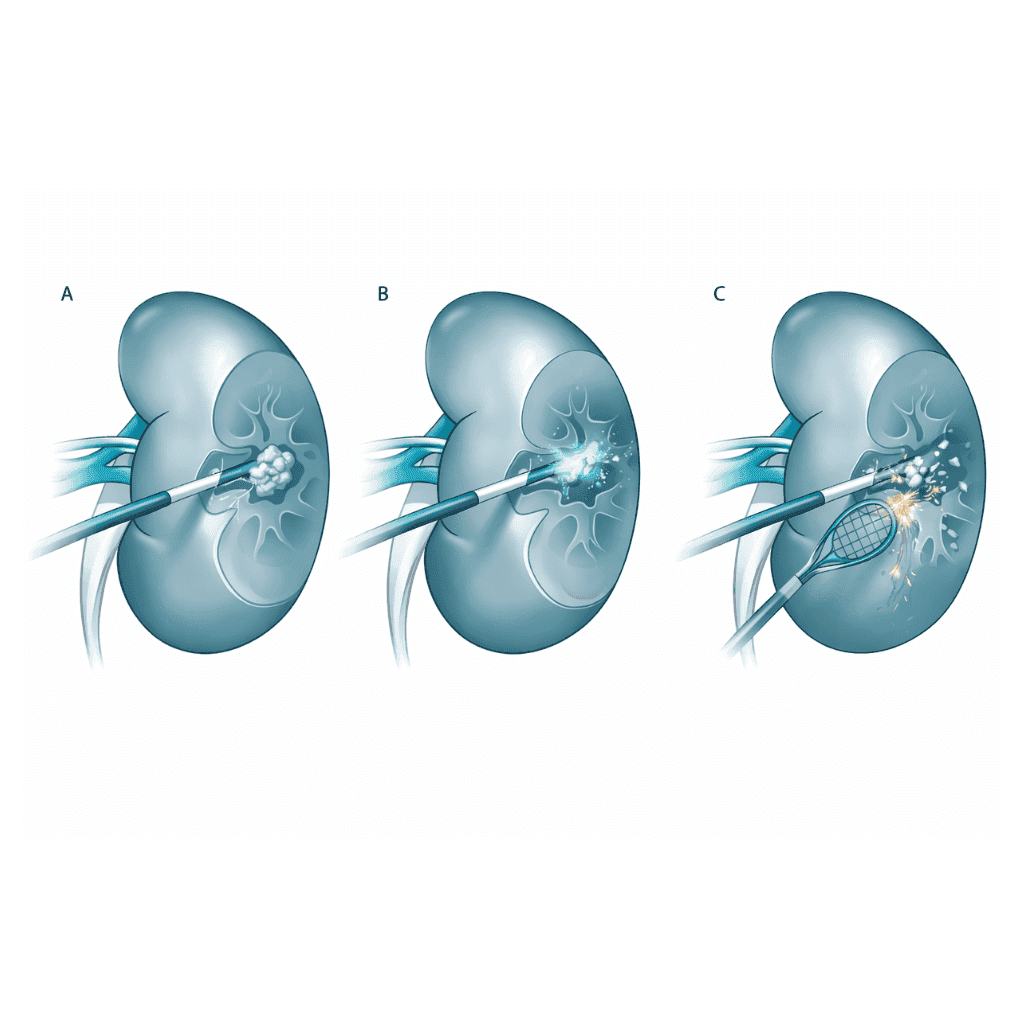
Kidney stones are hard crystals that form when urine contains more of a substance than it can dissolve. Not all stones are the same, and the type decides which diet, medicines and follow-up will stop new ones.
How stones form
When urine is concentrated, or contains too much calcium, oxalate, uric acid or cystine, or too little of natural inhibitors such as citrate, crystals form, stick together and grow. Dehydration, diet, genetics, infection and some medical conditions all play a part.
The four main types
| Type | How common | Main causes | Prevention focus |
|---|---|---|---|
| Calcium oxalate (and phosphate) | About 75–80% | Low fluids, high salt, high oxalate, low citrate, high urine calcium | Fluids, less salt, normal calcium, citrate |
| Uric acid | About 5–10% | Acidic urine, high-purine diet, gout, diabetes, obesity | Alkalinise urine; less red meat; can dissolve with medicines |
| Struvite (infection stones) | About 10% | Urinary infection with urease-producing bacteria; often staghorn | Complete stone removal and infection control |
| Cystine | Rare | Inherited condition (cystinuria), often from childhood | Very high fluid intake and specific medicines |
Why stone analysis is worth doing
After a stone passes or is removed, laboratory analysis tells you its type. Combined with blood tests and, for repeat stone formers, a 24-hour urine test, it lets your urologist give targeted advice instead of general rules. Dr. Negi has presented research showing that higher body mass index is associated with larger kidney stones, one reason weight and diet are part of prevention.
Treatment does not depend much on type, prevention does
Most stones are removed the same way, by laser treatment or PCNL depending on size. Uric acid stones are the exception, as they can often be dissolved with medicines. What changes most with type is how you prevent the next stone. See medicines for kidney stones and foods that increase stone risk.
Frequently asked questions
Which kidney stone type is most common?
Calcium oxalate stones make up the large majority of kidney stones.
Can a stone type change over time?
Yes, which is why repeat stones are sometimes analysed again.