
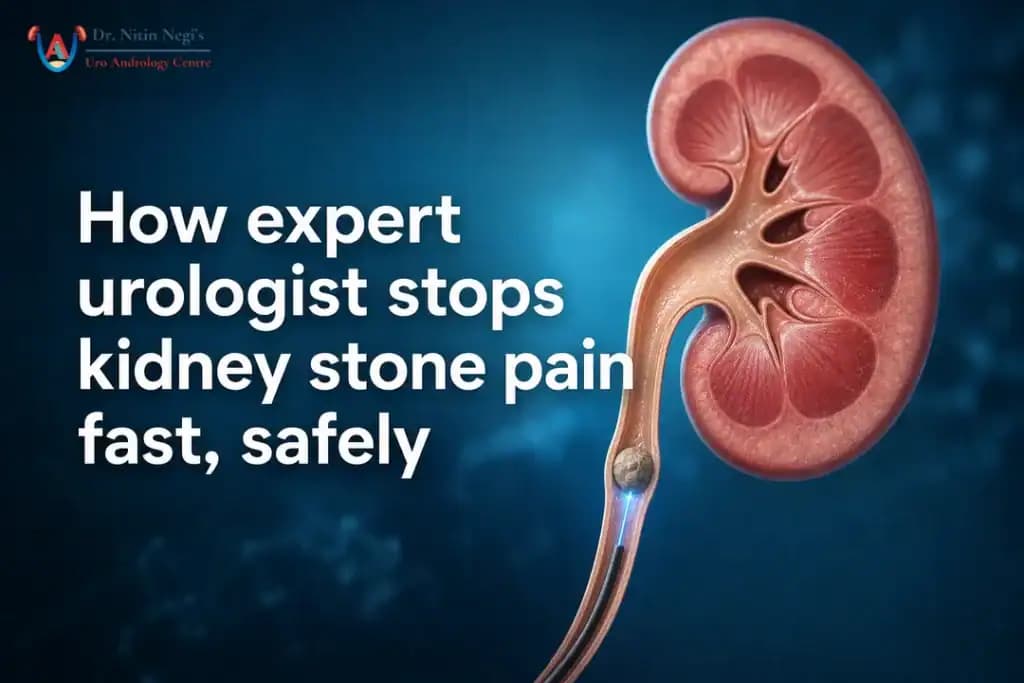
How expert urologist stops kidney stone pain fast, safely is exactly what this patient-first guide explains. You will learn what to do in the first 48 hours, which tests matter, and how modern urology treatment options shorten recovery without guesswork.

Fast relief roadmap: the first 48 hours
Kidney stone symptoms often start suddenly with sharp flank pain, nausea, or blood in urine. Therefore, your first goal is pain control and hydration while you plan next steps. In our clinic, we see that calm, early action prevents complications and speeds recovery.
First, confirm the red flags that deserve urgent care. For example, fever, persistent vomiting, severe urinary retention, or pain that does not respond to medicines can signal infection or blockage. In that case, head to emergency care without delay.
Pain control you can do at home
Over-the-counter anti-inflammatory tablets may help if a doctor has approved them for you. However, avoid them if you have stomach ulcers, kidney disease, or are pregnant. In addition, strain your urine if possible, because capturing a stone helps the team choose the right kidney stone treatment later.
Hydration tactics that help, not harm
Drink small, frequent sips of water. Too much water at once can worsen nausea. Meanwhile, reduce salt and cola drinks. Notably, the World Health Organization advises adults to limit salt to less than 5 grams per day, a habit that supports kidney health over time (WHO guidance on salt intake).
Next, write down your symptoms and medicines you have taken. Above all, schedule an assessment with a trusted specialist at a reputable urology clinic. If you need guidance or a prompt visit, explore advanced urology care with a team experienced in stone and prostate health.
What an expert urologist checks before treatment
During the first consultation, your doctor focuses on three things: confirming the diagnosis, ruling out infection or obstruction, and preventing recurrence. We follow this pattern every day, because it consistently protects patients from avoidable risks.
Essential tests and what they show
First, a urine analysis looks for blood, crystals, and infection. Next, blood tests check kidney function and electrolytes. Importantly, imaging confirms stone size and location. An ultrasound can visualize hydronephrosis and larger stones while avoiding radiation. In contrast, a non-contrast CT scan maps tiny stones and exact anatomy with high accuracy.
Imaging clarity: ultrasound versus CT
Ultrasound suits many first assessments and helps in follow up. However, CT provides definitive detail when pain persists or surgery is planned. Results guide whether medicine, observation, or minimally invasive urology surgery is the safest path.
We also discuss your other urinary problems, such as urinary tract infection history, bladder infection episodes, urinary incontinence, or hematuria. For men, we screen prostate health and ask about lower urinary tract symptoms, including weak stream, frequency, and urgency. Because of this, we may evaluate for enlarged prostate and plan BPH treatment, laser prostate surgery options, or medical therapy when appropriate.
Treatment options explained: from medicines to laser surgery
Not every stone needs surgery. In fact, many small ureteric stones pass with time, fluids, and pain control. According to broadly cited data, the lifetime risk of kidney stone disease can reach around 10–15% in some populations (Wikipedia overview of kidney stone disease). Therefore, we tailor therapy to your size, site, and symptoms instead of using a one-size-fits-all plan.
For stones roughly 5 mm or smaller without infection, we may try medical expulsive therapy. Alpha-blockers can relax the ureter, and anti-inflammatories reduce swelling. However, we review side effects and interactions to keep your urinary health safe.
Minimally invasive procedures and laser kidney stone surgery
When stones cause ongoing pain, blockage, or infection—or when they are simply too large—minimally invasive options deliver fast relief and high success. Our team performs ureteroscopy (URS) and retrograde intrarenal surgery (RIRS) for many cases. These endoscopic approaches reach the stone through natural urinary passages without any back incision.
RIRS and URS: how they work
In URS or RIRS, we pass a tiny scope through the urethra and bladder and into the ureter or kidney. A laser fiber then dusts or fragments the stone. Consequently, we remove pieces with baskets or leave a stent temporarily to ensure smooth drainage. Patients usually go home the same day, walk the next morning, and resume light work quickly.
For larger stones or specific anatomy, we may consider percutaneous nephrolithotomy (PCNL) or mini-PCNL, which removes stones through a small back tract. Meanwhile, selected cases benefit from shock wave lithotripsy. We discuss benefits, risks, and recovery for each method so you can choose confidently.
Our experience also covers related male health issues. For instance, some patients arrive for kidney stone removal yet also struggle with erectile dysfunction or male infertility. In such cases, andrology evaluation runs in parallel to protect overall men’s health without delaying urgent stone care.
Picking the right urology doctor
Credentials, experience, and technology all matter. Look for a center that offers laser kidney stone surgery, modern imaging, and safe anesthesia support. Furthermore, check whether the team also handles prostate treatment, urinary tract infection management, and complex urological disorders. For a reliable starting point, visit Dr. Nitin Negi’s urology clinic to review services and plan a visit.

Recovery, prevention, and when to call your expert urologist
Recovery starts the moment pain eases. We advise short walks, plenty of water, and timely follow ups. Importantly, keep a symptom diary that notes UTI symptoms, fever, or persistent urinary tract health concerns. If a stent was placed, ask about activity limits and removal timing to avoid urinary irritation.
Diet and lifestyle play a big role in kidney stone prevention. Therefore, we emphasize three pillars: hydration, salt control, and moderation of animal protein. Aim for pale-yellow urine through the day. In addition, reduce high-oxalate foods if your stone analysis indicates oxalate content. Above all, avoid crash diets and extreme supplements that can strain kidney care.
- Drink water steadily; add lemon for citrate if your doctor agrees.
- Limit sodium; WHO suggests under 5 g of salt daily.
- Balance calcium intake through food rather than pills unless advised.
- Move daily; even brisk walks support bladder and kidney health.
- Review medicines that influence stones, such as certain diuretics.
Sometimes stones coexist with obstruction or infection. If you notice fever, chills, cloudy urine, or new back pain, call your care team fast. Similarly, sudden urinary retention or severe colicky pain warrants urgent assessment. We prefer quick calls over delayed visits because timing prevents complications.
Questions to ask your urology doctor
Good questions lead to better outcomes. For example, ask what your imaging shows, which option offers the highest clearance, and how many similar procedures your team performs. Next, confirm the plan if pain returns at night, and whether a stent or catheter is likely. Finally, discuss long-term steps for kidney stone prevention and prostate health monitoring if you are over 50 or notice lower urinary tract symptoms.
Prostate and bladder care alongside stone management
Many patients discover prostate enlargement during a stone workup. We screen for BPH treatment options ranging from medicines to laser prostate surgery. Meanwhile, we evaluate overactive bladder, incontinence, or pelvic floor issues that can mimic stone pain. This whole-system view reduces repeat visits and builds lasting urinary tract health.
Our day-to-day experience confirms a simple truth: personalized plans beat generic advice. Results vary by stone composition, anatomy, and medical history. Still, consistent follow up, the right procedure, and focused lifestyle changes help most people return to work and life quickly.
Closing thoughts
Effective relief blends smart self-care, accurate diagnostics, and precise procedures. If you follow the steps here and partner with an expert urologist, you can control pain, protect kidney function, and reduce recurrences. For tailored guidance, book a consultation; our team values clear explanations, transparent choices, and safe outcomes.
Contact Information
📞 Phone: 9145888224, 9649888222
🏥 Hospital Address: MangalamPlus Medicity, Jaipur
🏥 Clinic Address: VS MediHUB,Jaipur